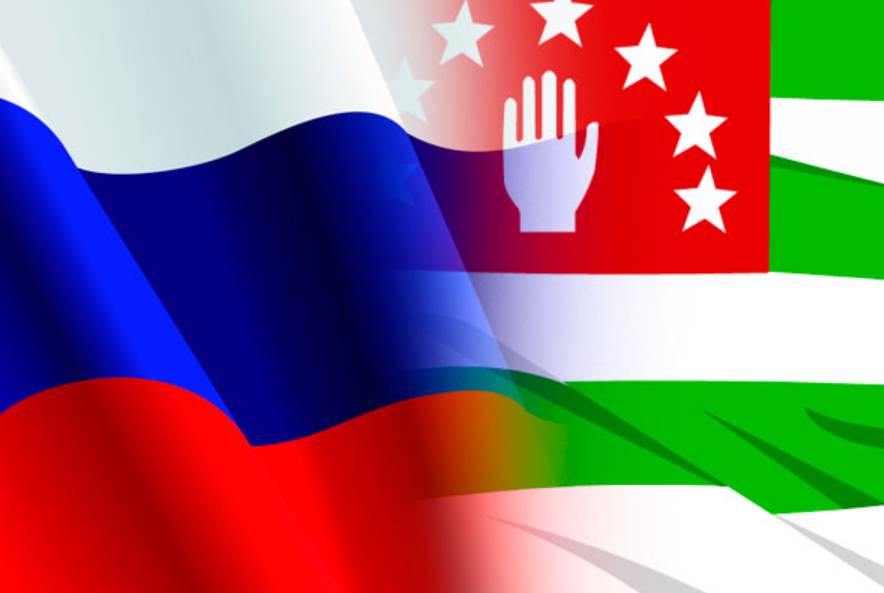
Abkhazia demanded that Georgia cancel the law "On Occupied Territories"

The new Minister of Foreign Affairs of Abkhazia, Oleg Bartsits, said that Tbilisi should abolish the law "On Occupied Territories" and sign an agreement with Sukhuma and Tskhinvali on the non-use of military force.

"Statements by the leadership of Georgia that they would like to improve relations with their main neighbors - Abkhazia, South Ossetia and the Russian Federation - do not escape our attention, but at the same time practical confirmation, real steps are necessary. From my point of view, there are several of them, including the repeal of the law "On Occupied Territories", which cannot withstand any criticism, any test of time. It is necessary to give an account of what actual realities we are in today. The second is very important, and we will focus the attention of all colleagues on the negotiations in the Geneva format on this - the signing of the agreement on the refusal to use military force. After that, we can talk about something else," the head of the Foreign Ministry emphasized.

The Law "On Occupied Territories" was adopted soon after the Russian-Georgian "August War" of 2008. The document provided for the introduction of a special legal regime in the territories of Abkhazia and South Ossetia, which appear in the law as the Abkhaz Autonomous Republic and the Tskhinvali region, as well as their adjacent zones. In particular, a ban was introduced on visiting the occupied territories bypassing official checkpoints, as well as conducting economic and other activities there.

In February 2103, when the "Georgian Dream" came to power, mitigating amendments were made to the law: the offense began to be qualified only as an administrative offense with a fine.

Georgian mass media note that today there are numerous cases when persons (including public ones) who violated the law "On Occupied Territories" freely enter the territory of Georgia and vice versa without any consequences for themselves.
Последние новости
Georgia again rejected calls to join anti-Russian sanctions
Politics
Georgia again rejected calls to join anti-Russian sanctions
25 February 2026

Georgian Prime Minister Irakli Kobakhidze criticized Brussels' demands to join sanctions against Russia. He said these calls were inappropriate, given that the EU itself is a major importer of Russian products.

Ruben Vardanyan Drops Appeal Against 20-Year Sentence in Azerbaijan
Human rights
Ruben Vardanyan Drops Appeal Against 20-Year Sentence in Azerbaijan
25 February 2026

Billionaire and former Nagorno-Karabakh state minister Ruben Vardanyan, sentenced in Baku to 20 years in prison, rejected the legal force of the ruling and dropped his appeal. His family explained that this decision stemmed from the fact that, in their view, the trial was a "staged performance" rather than a proper trial: the hearings were held behind closed doors, without access to independent observers, and the prosecution's motions were ignored. The full text of the verdict was also not released.

Azerbaijani political prisoners appeal to the European Commission to address human rights in the country
Human rights
Azerbaijani political prisoners appeal to the European Commission to address human rights in the country
25 February 2026

A group of imprisoned activists and journalists from Baku's Penal Colony No. 2 has appealed to the President of the European Commission. They demand the implementation of European Parliament resolutions calling for the release of Azerbaijani political prisoners.

Chechnya Leads in Lowest Alcohol Sales
Economy
Chechnya Leads in Lowest Alcohol Sales
25 February 2026

In 2025, residents of the North Caucasus regions consumed the least amount of hard liquor in Russia. The lowest official retail sales figures were recorded in Chechnya (0.01 liters per capita). Other republics of the North Caucasus Federal District also demonstrated modest figures: Ingushetia - 0.7 liters, Dagestan - 2.2 liters, Kabardino-Balkaria - 2.6 liters, North Ossetia - 3 liters, and Karachay-Cherkessia - 3.4 liters. Experts attribute this decline to the prevalence of cultural and religious restrictions, as well as a preference for low-alcohol beverages.