Aliyev: Armenia Must Reveal the Fates of Missing Azerbaijanis
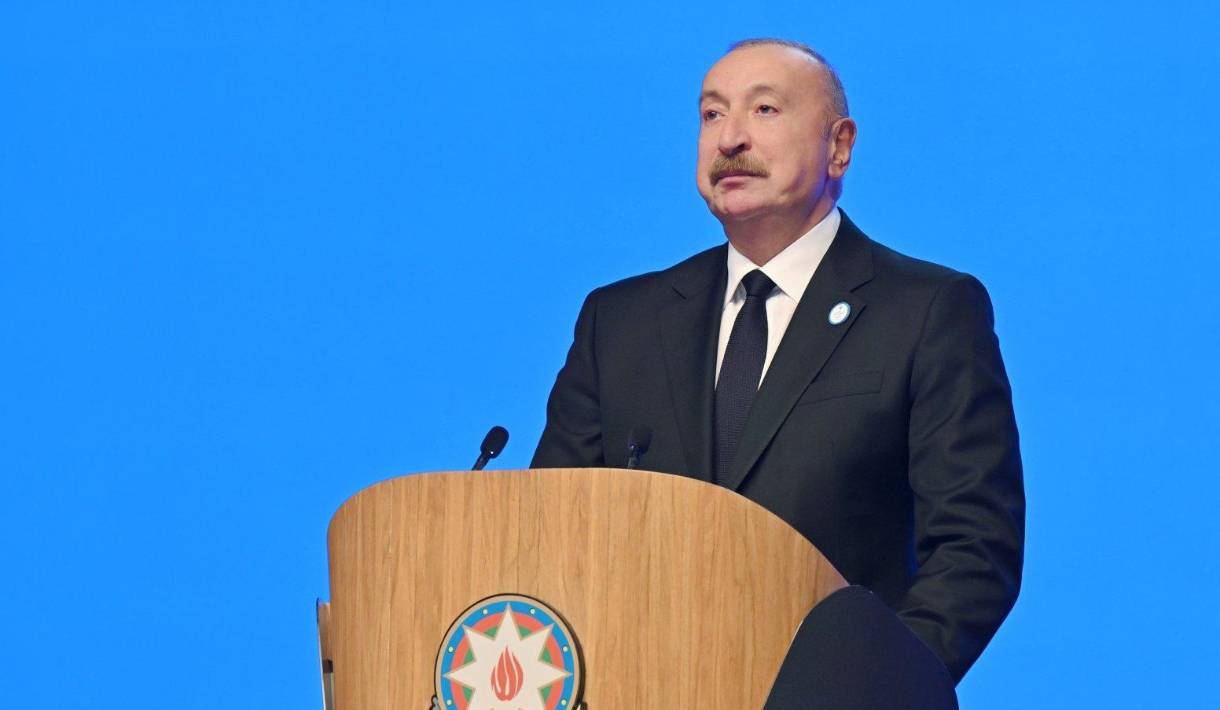
Azerbaijani President Ilham Aliyev considers determining the fates of missing persons to be one of the state's most important issues. He stated this in an address to participants of the 4th International Conference on Missing Persons, currently taking place in Baku.
According to data cited in the address, 4,010 Azerbaijani citizens—including children, women, and the elderly—have been registered as missing as a result of the conflict spanning more than 30 years. Thirty-two mass graves have been discovered in territories that have come under Baku's control.
Following the end of the war and the return of these territories to Azerbaijani control, Aliyev noted that new opportunities have emerged to search for the missing. The State Commission on Prisoners of War, Hostages, and Missing Persons has expanded its efforts to locate these individuals and identify mass graves.
"Azerbaijan will continue to mobilize all its resources to ascertain the fate of those whose whereabouts remain unknown. Not a single one of our missing citizens has been forgotten, and determining their fates remains a top priority for the state," the address states.
Aliyev specifically addressed Armenia, emphasizing the need for access to information held by that country.
"The effectiveness of the search for missing persons depends directly on obtaining accurate information. Armenia must provide all information regarding the fates of missing Azerbaijanis and the locations of mass and individual graves, and must facilitate access to relevant archives and the collection of witness testimony," the address notes.
According to the president, resolving the issue of missing persons must remain part of the peace process and should not be contingent upon political conditions. "This would constitute a legal obligation and a humanitarian responsibility, as well as a practical expression of commitment to peace and a contribution to strengthening mutual trust. Information regarding people's fates must not become a subject of political conditionality," the text emphasizes.
Aliyev also proposed establishing a special UN mechanism to address the issue of missing persons. In his view, international organizations should play a more active role in search operations, information exchange, the development of forensic capabilities, and support for families.
Pashinyan has identified the issue of missing persons as one of the unresolved matters in relations between Armenia and Azerbaijan. Speaking at the UN General Assembly on September 24, he stated that the parties had already agreed to cooperate in determining the fate of several thousand individuals whose whereabouts remain unknown.
Recently, another issue concerning the fate of an Azerbaijani citizen has drawn the attention of both countries. Azerbaijani serviceman Nasimi Musayev—who had previously been declared wanted after disappearing from his duty station—was detained in Armenia following an illegal border crossing. On October 6, Prime Minister Nikol Pashinyan stated that the criminal case against Musayev would be heard in Armenia, but he did not give a direct answer regarding the possible handover of the serviceman to Azerbaijan.