Aliyev accused the OSCE Minsk Group of failing to resolve the Karabakh conflict
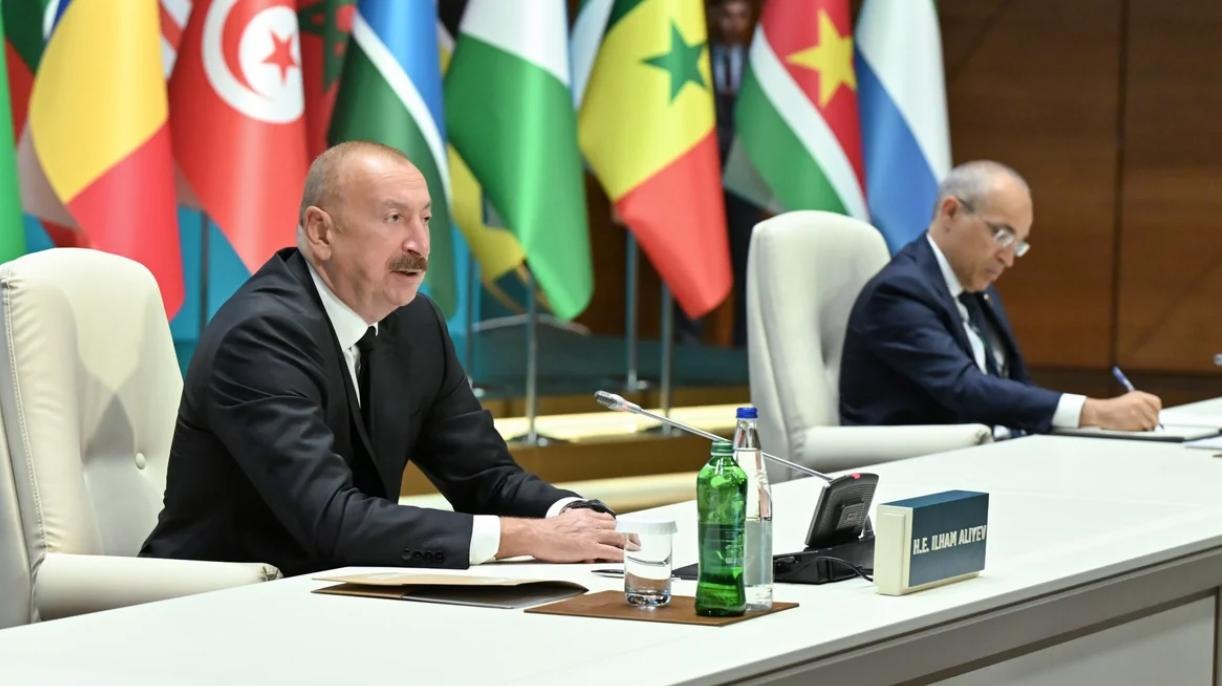
For 30 years, while Azerbaijani territories were under occupation, fruitless negotiations were repeatedly held, and France, Russia, and the United States, as co-chairs of the OSCE Minsk Group and with a mandate to achieve peace and liberate our territories from occupation, were unable to force Armenia to withdraw from Azerbaijani territory, stated Azerbaijani President Ilham Aliyev, speaking at the opening of the 2026 Annual Meetings of the Islamic Development Bank Group in Baku.
Returning to past events, Aliyev lamented: "At the beginning of the negotiation process, we had great hopes. We sought to resolve the issue peacefully, trying to convey to the major powers that the truth was on our side. Our territories were occupied by Armenian troops. In response, we heard: go and negotiate. That was one of the messages. The second was: there is no other solution. The third was: you cannot start a war. Fourth, if you start a war, sanctions will be imposed against you."
The President of Azerbaijan claims that Armenia committed urbicide (destruction of cities) in the occupied territories of Karabakh in the 1990s, but no sanctions were imposed.
"This is a clear example of double standards in international relations and demonstrates the existence of a serious contradiction between declared values and actual policy," Aliyev emphasized.
He notes, not without pride, that Azerbaijan "took revenge on the battlefield, and that's enough."
"This war had to end, and we, as the stronger side, proposed peace, and now peace is a reality," the President declared.
Meanwhile, Armine Tigranyan, a historian and researcher at the Monument Watch project and the Amberd analytical center, accused Azerbaijan in an interview with RFI of destroying Armenian heritage in Nagorno-Karabakh, including churches such as the Ghazanchetsots Cathedral in Shusha, "where, during restoration work after the Second Karabakh War, the Azerbaijani side remodeled the dome, violating the integrity and authenticity of the building." According to Tigranyan, the Kanach Zham (Green Church), built in the 19th century in Shusha, and the Cathedral of the Intercession of the Holy Virgin in Khankendi were also destroyed.
Armenia and Armenian experts have repeatedly accused Azerbaijan of destroying Armenian cultural heritage, calling these actions "cultural genocide." Azerbaijan, in turn, accuses Armenia of urbicide—the destruction of cities and infrastructure in territories that were under Armenian control until 2020.
The resolution adopted by the European Parliament calling for those responsible to be held accountable is politicizing Azerbaijan's relations with the EU.
As a reminder, the collapse of the USSR and the 1992-1994 conflict left the former Nagorno-Karabakh Autonomous Oblast and adjacent Azerbaijani territories under the control of Armenian forces.
In September 2020, the conflict between Armenia and Azerbaijan resumed. Thanks to Russia's mediation, a ceasefire was reached on November 10, 2020. Azerbaijan regained control over the areas previously under Armenian control.
On September 19, 2023, Azerbaijan launched an operation in Karabakh, calling it anti-terrorist measures. The ceasefire was conditional on the withdrawal of Armenian armed forces from Karabakh.
On August 8, 2025, a peace declaration was signed in Washington, D.C., following talks between the President of Azerbaijan and the Prime Minister of Armenia. In it, the parties committed to recognize and respect each other's sovereignty, territorial integrity, inviolability of international borders and political independence.