Most Victims of Spring Floods in Dagestan Have Still Not Received Compensation
Efforts to deal with the aftermath of the spring floods, which caused widespread destruction in Dagestan, are still underway. Nearly five months after the disaster, the authorities said that one-off payments had been approved for 85,000 residents. According to their figures, the total amount paid has exceeded 3.26 billion roubles. At the same time, the republic has begun issuing housing certificates to people whose homes were completely destroyed or seriously damaged. The first 68 certificates were received by residents of the Khasavyurt and Derbent districts.
Dagestan Prime Minister Magomed Ramazanov announced this on August 28 at a meeting of the government commission overseeing the response to the emergency. According to him, the authorities had received a total of 3,367 applications for housing certificates: 1,868 were related to major repairs of damaged homes, while another 1,499 concerned the construction of new housing to replace homes that had been lost. On May 22, Russian Emergency Situations Minister Alexander Kurenkov reported that residents of Dagestan had submitted more than 274,000 applications for various forms of assistance. By that point, the authorities had processed more than 179,000 applications, while more than 94,000 were still being considered.
By July 10, payments had been made to 68,000 people, who received a total of 2.4 billion roubles. The republican government said at the time that it had reviewed more than 91% of the applications received. On August 21, the number of recipients had reached 83,000, while the amount of money paid had exceeded 3.1 billion roubles. Magomed Ramazanov reported the figures. On August 28, the authorities reported that payments had been approved for 85,000 residents, totaling more than 3.26 billion roubles.
If the 85,000 recipients are compared with the latest published figure of more than 274,000 applications, they account for about 31%. The Kavkaz.Realii outlet reached this conclusion after comparing the official figures.
In August, the Emergency Situations Ministry reported that inspections of flooded homes had been completed, while the Dagestan authorities had received more than 3,000 applications for housing certificates. By August 21, most of the applications had already been reviewed and confirmed by the relevant inspection reports. Ramazanov also assured residents at the time that the certificates would soon begin to be issued. On August 28, the first 68 housing certificates were received by residents of the Khasavyurt and Derbent districts. A total of 3,367 applications have been accepted: 1,868 for major repairs of damaged homes and 1,499 for the construction of new housing to replace homes that were destroyed.
In the settlement of Mamedkala in Derbent District, 52 houses have been built for families affected by the floods. On August 29, Ramazanov inspected the new residential neighborhood. According to the local government, the main construction work on all 52 houses has been completed, the area has been landscaped, and the houses have been connected to utility networks. Gasification is nearing completion. The homes are being prepared for handover to the families.
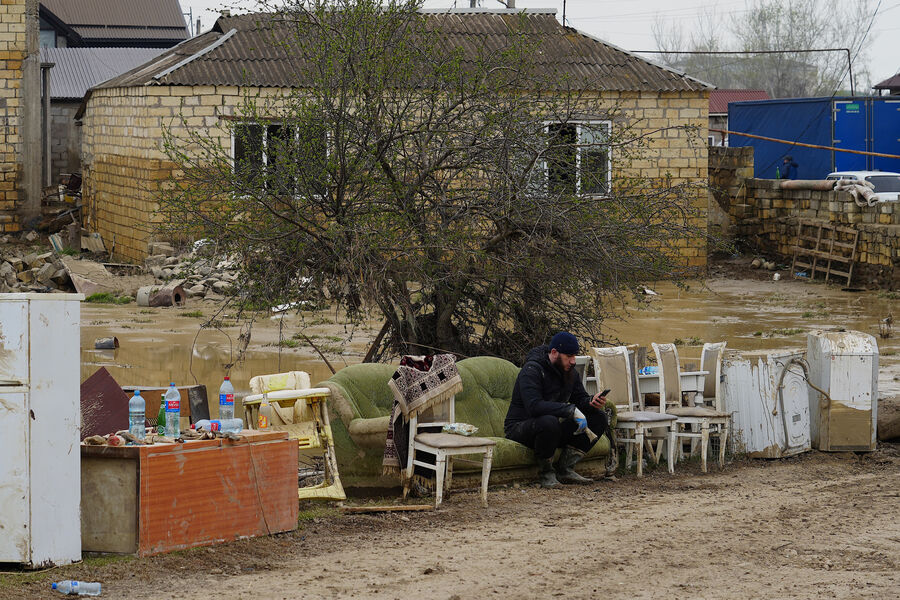
The floods began after heavy rains in late March and early April. A federal-level state of emergency was declared in Dagestan. According to the Emergency Situations Ministry, 9,800 residential buildings were flooded in the republic, with 7,100 of them subsequently classified as damaged. Six people were killed in the disaster, while more than 6,200 residents were affected. Emergency Situations Minister Alexander Kurenkov provided these figures on May 22.
In addition to residential buildings, the floods caused serious damage to social infrastructure. By the start of the school year, 119 educational facilities damaged during the emergency had been restored in Dagestan. According to Ramazanov, they are ready to receive students on September 1.
The head of the republican government said that two schools had been built using modular structures. Another five modular facilities are under construction: three schools, a kindergarten and a catering building. By the end of the year, Ramazanov said, the authorities plan to complete the restoration of two cultural centers in the villages of Adilyotar and Tagirkent. The federal budget has allocated 54 million roubles for the work.