Tsulukiani: Saakashvili's steps since 2004 have undermined Georgia's territorial integrity
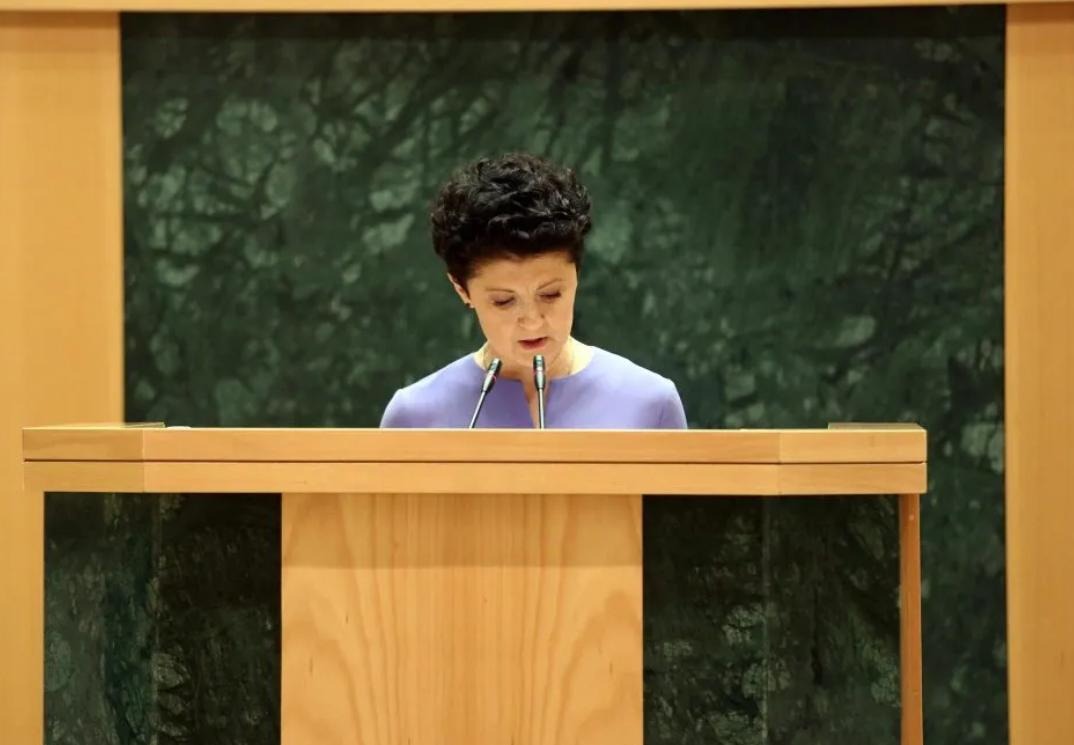
Tea Tsulukiani, chair of the temporary parliamentary commission investigating the activities of the National Movement, presented a report on the work done at a plenary session of the Georgian parliament. According to her, the investigative body established that, starting in 2004, Mikheil Saakashvili and his party took actions that weakened the country's position, undermined the peace process in the Tskhinvali region and the Kodori Gorge, and created a threat to Georgia's territorial integrity.
Tsulukiani emphasized that Saakashvili relied on the support of external forces, which led the country to confrontation, destabilization, and increased tension in the occupied territories. She recalled the testimony of Irakli Batiashvili and other persons interviewed by the commission: already in 2006, the actions of the authorities created the preconditions that Russia subsequently used to seize the Kodori Gorge in 2008.
In the report, the commission described Saakashvili's course as "militaristic and irresponsible", especially after the death of Prime Minister Zurab Zhvania. The Ergneti market, which, according to the commission members, performed an important peacekeeping function between Georgians and Ossetians, was closed. In addition, OSCE projects in the Tskhinvali region in the areas of health care, culture and humanitarian aid ceased to operate, which, as noted, dealt an additional blow to inter-community ties.
According to Tsulukiani, in May 2004, after the "National Movement" established control in Adjara, Saakashvili repeatedly stated: "Next is Tskhinvali." His rhetoric, she emphasized, caused concern even among Western partners, which, in particular, Condoleezza Rice wrote about in her memoirs.
Separately, Tsulukiani mentioned the creation in 2007 of the temporary administrative unit "Administration of South Ossetia", which, according to her, artificially drew the peaceful Akhalgori municipality into the conflict zone and was subsequently used by Moscow as a tool to undermine Georgian statehood.
According to the commission, two key steps by the authorities in 2006 contributed to the subsequent occupation of the Kodori Gorge by Russia: the disarmament of local residents, which effectively deprived Georgia of control over the territory, and the introduction of armed units contrary to the ceasefire agreement of May 14, 1994.
"Russia immediately took advantage of this. The UN Security Council raised the issue of the Georgian side's violation of the agreement, and adopted a resolution that caused damage to our country. Thus, the actions of Saakashvili and the National Movement provided Moscow with a legal pretext, which it used to undermine Georgia's territorial integrity in 2008," Tsulukiani said.