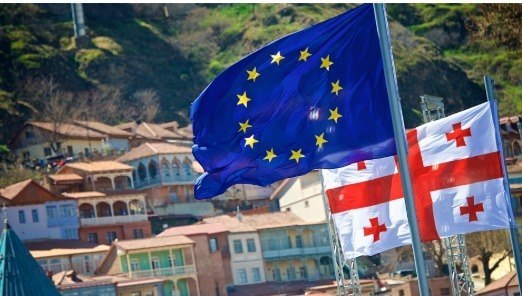
Georgia has expressed its readiness to improve relations with the European Union
Georgia has asked Luxembourg to facilitate the resumption of dialogue with the EU. Nikoloz Samkharadze, Chairman of the Parliamentary Committee on Foreign Relations and a member of the ruling Georgian Dream party, announced this following a visit to Luxembourg.
Samkharadze emphasized his team's readiness to resume negotiations in any format and their openness to discussing key issues—in particular, the law on media and party transparency, which served as the formal pretext for terminating dialogue between Georgia and the European Union.
"The Luxembourg side has demonstrated significant constructiveness toward our position, and we hope that during the meetings of EU member states, they will support the resumption of dialogue with Georgia," Samkharadze stated.
As a reminder, in 2024, Georgian Prime Minister Irakli Kobakhidze announced the freezing of EU accession negotiations until 2028. Subsequently, he and other high-ranking politicians criticized Europe, accusing it of imposing its interests, funding the Georgian opposition, and attempting to open a "second front" against Russia. In response, Brussels criticized Tbilisi for backsliding on democracy, persecuting the opposition, and entering Moscow's orbit.
Meanwhile, former Georgian President Salome Zurabishvili, in an interview with the American channel CBS News, noted that Ukraine and Moldova had already taken the first steps toward European integration.
The politician emphasized that Georgia should also have been at this stage, but its absence was explained by pressure from Russia and the current "regime" in the country—the ruling Georgian Dream party.
"Georgia, once considered the closest to the doors of the European Union and NATO," she said. Yesterday, we witnessed the first steps of Ukraine and Moldova on the path to European integration—a path that Georgia should also have taken, but is currently not there due to pressure from Russia and the current regime that holds power in the country,” Zurabishvili said.