Imam in Georgia Beaten After Speaking Turkish
An attack on the family of a Meskhetian Muslim in the southern Georgian town of Akhaltsikhe has raised questions about the police response. The victims say more than ten men assaulted the local mosque’s imam, Shevket Dvalidze, but only two suspects were detained and later released on bail. Human rights groups are calling for investigators to examine whether the attack was motivated by ethnic, linguistic and religious hatred.
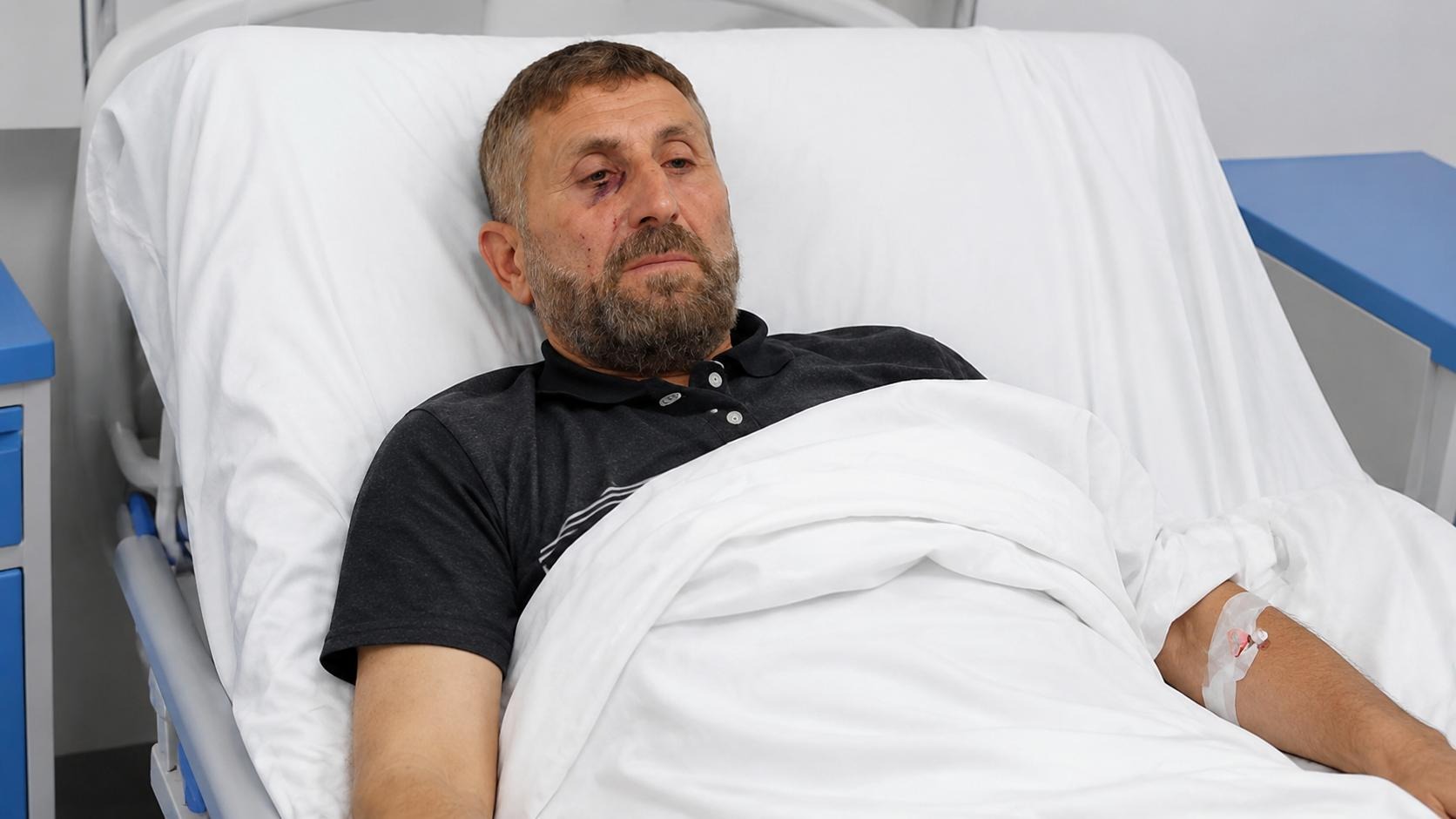
Shevket Dvalidze, the 56-year-old imam of Akhaltsikhe Mosque, and several members of his family were assaulted on the evening of 18 July in the courtyard of his father’s home. According to the victims, the confrontation began after the imam’s son, Omar Dvalidze, spoke Turkish with his 16-year-old cousin, who had travelled to Georgia from Turkey.
Speaking to the Georgian news outlet Batumelebi, Omar Dvalidze said he and his cousin had gone for an evening walk when they encountered two groups of men — one consisting of teenagers aged around 18 or 19, the other of older men who had been drinking alcohol.
The conversation initially remained calm. One of the men offered the pair beer, but Omar declined, explaining that they were Muslims and did not drink alcohol. The discussion was conducted in Georgian, but because his cousin did not speak the language, Omar translated the conversation into Turkish.
According to Omar, one of the men then insisted that they stop speaking Turkish. He said the man repeated at least ten times that people in Georgia should speak Georgian. Omar explained that his cousin had come from Turkey for only a few days and simply did not understand Georgian.
The man then began questioning the two about who they were and why they were in Akhaltsikhe. When Omar pointed to his grandfather’s nearby house, the man demanded the names of his relatives, mocked one family member’s name and insulted him. Omar said the man then approached his 16-year-old cousin, prompting the teenager to run back to the house.
Omar followed, but a group of around 10 to 12 men chased them and forced their way into the family’s courtyard. Relatives, including Shevket Dvalidze, came outside after hearing the commotion. According to the family, one of the attackers struck the imam in the face almost immediately after he asked what had happened.
“They knocked my father to the ground, and seven or eight men kicked him,” Omar said.
According to the family, female relatives and neighbours eventually forced the attackers out of the courtyard and called the police.
The imam suffered the most serious injuries and was taken to a local hospital. His brother, Shir Muhammad Dvalidze, and several other relatives were also injured. Turkish media identify Shevket Dvalidze as a former Mufti of Ahiska and a member of the World Union of Ahiska Turks (DATÜB).
Family members provided police with the names of the alleged attackers. They said one relative personally knew everyone who had entered the courtyard. Nevertheless, police detained only two suspects, both of whom were later released on bail.
Georgia’s Interior Ministry said it had opened an investigation under Article 126 of the Criminal Code, which covers violence and carries a maximum sentence of one year’s imprisonment depending on the circumstances.
At the time of publication, the ministry had not said whether investigators were considering hate crime as a possible motive or whether the charges might be reclassified as the investigation progresses.
Dvalidze also alleged that police officers attempted to persuade him to withdraw his complaint after the attack. Speaking to journalists, he sarcastically thanked the Akhaltsikhe police for their “very active work.”
“They indirectly pushed me to withdraw my complaint. Let’s just say they did it in a disguised way. Those who understand will understand,” Dvalidze said.
The imam added that he no longer feels safe following the assault. He said he has lived in the town of Vale for more than 16 years and had never previously experienced such treatment.
Dvalidze is a Meskhetian Turk. He returned to Georgia with part of his family in 2001. They initially settled in Marneuli before moving to Akhaltsikhe and later purchasing a home in Vale. For the past decade, he has served as imam of Akhaltsikhe Mosque and is widely known among local residents as Shevket Hoca.
Commenting on the attack, Dvalidze said Meskhetian Turks consider themselves an integral part of Georgia and seek to live peacefully alongside the country’s other communities. At the same time, he highlighted longstanding problems faced by the community, including difficulties obtaining Georgian citizenship and learning the Georgian language, particularly among older generations.
“Loving your own heritage does not mean rejecting others. Georgia is a multinational country, and we are part of it too. We are few in number, but we exist,” he said.
He added that members of the community make an effort to learn Georgian, speak it with their neighbours and use it in everyday life, although older people often find mastering the language particularly difficult.
The incident drew a strong response from Georgia’s Social Justice Center, a human rights organisation, which argued that the circumstances suggest the assault should be investigated not simply as an act of violence but as a possible hate crime.
The organisation noted that the confrontation began after the victims spoke Turkish, involved remarks about their ethnic background, and escalated into a pursuit to their home followed by a group assault. In its view, the alleged discriminatory motive was not incidental but may have been the primary reason for the attack.
The Social Justice Center called on investigators to examine possible linguistic, ethnic and religious motives, identify all those involved in the assault, and investigate allegations that police attempted to pressure the imam into withdrawing his complaint. It also urged the authorities to publicly condemn the violence and ensure protection for the Dvalidze family.
Human rights advocates also pointed to several similar incidents in Georgia over the past year involving minority languages or insufficient knowledge of Georgian.
In September 2025, a minor was reportedly beaten in Marneuli after being told to “go back to your homeland,” allegedly because he did not speak Georgian. In the same month, a mother and son of Azerbaijani origin were subjected to threats and verbal abuse in Tbilisi. In July 2026, another attack was reported against a 15-year-old boy after he was heard speaking Azerbaijani.
Following media reports, Georgia’s Public Defender’s Office announced that it had begun examining the circumstances of the case and would request the investigation file from the Interior Ministry.
The assault also sparked a reaction in Turkey. Kaan Koç, a lawmaker from the ruling Justice and Development Party (AK Party), condemned what he described as an unacceptable provocation against Meskhetian Turks.
He called for peace, fraternity and coexistence to be preserved in Akhaltsikhe and expressed hope that the Georgian authorities would conduct a thorough and impartial investigation. Koç also said that Meskhetian Turks “are not alone,” adding that they have the support of the Republic of Turkey and President Recep Tayyip Erdoğan.
Meskhetian Muslims, also known as Meskhetian Turks, originate from the historic Ahiska region in what is now southwestern Georgia. In November 1944, Soviet authorities deported tens of thousands of members of the community to Central Asia. Many later resettled in Azerbaijan, Russia, Turkey, Ukraine, Kazakhstan and other countries.
After joining the Council of Europe, Georgia committed itself to facilitating the return of deported Meskhetians. However, the repatriation process and the granting of citizenship have remained slow and complex. Human rights groups argue that the attack on the Dvalidze family reflects broader challenges surrounding the integration of repatriated Meskhetian Muslims and the persistent prejudice they continue to face from parts of Georgian society.