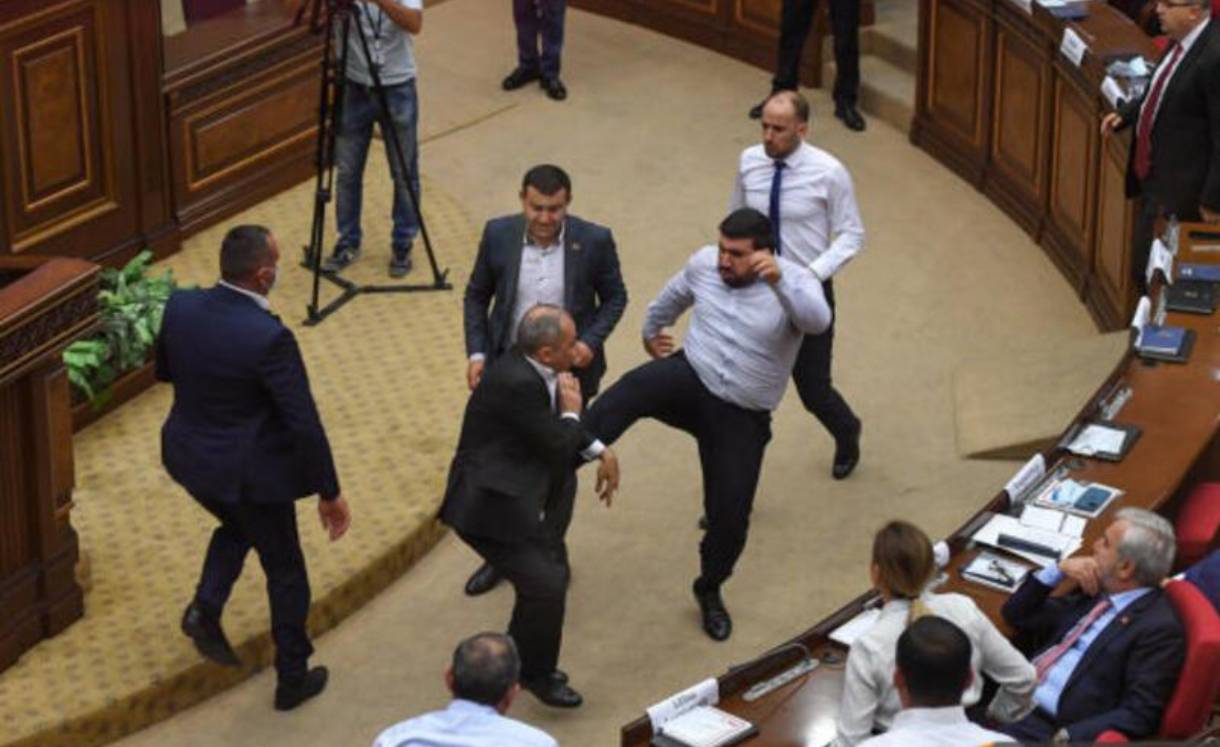
Kavelashvili Signs Law Tightening Penalties for Violations at Demonstrations

Georgian President Mikheil Kavelashvili, whose legitimacy is disputed by the opposition and a significant portion of civil society, has signed a bill toughening penalties for violations related to assemblies and demonstrations. The document amends the Code of Administrative Offenses and the Criminal Code of Georgia.

On October 16, the country's parliament passed the bill in a third reading under an expedited procedure. According to the amendments, first-time offenses such as wearing a face covering, using or possessing tear gas and other toxic substances, blocking roads, and erecting temporary structures during a demonstration will be punishable by administrative arrest for up to 15 days. If the offender is the organizer of the event, the administrative arrest period is increased to 20 days.

Participation in a demonstration that is subject to termination at the request of the Ministry of Internal Affairs will be punishable by administrative arrest for up to 60 days. The same measure applies to individuals who, during an assembly, possess weapons, fireworks, or objects capable of causing harm to the life and health of others.

The amendments also address repeat violations. According to the amendments to the Criminal Code initiated by the ruling Georgian Dream party, repeat offenses will result in imprisonment for up to one year, while third and subsequent offenses will result in up to two years.

The document also includes a new article establishing criminal liability for insulting a law enforcement officer or failing to comply with their lawful orders if such actions are committed for the third time.

Furthermore, the law provides for the possibility of prosecuting minors for violating the rules for holding assemblies and demonstrations. They are subject to fines, correctional labor for up to one year, or imprisonment for the same period.

The authorities say the measures taken are aimed at maintaining public order, but critics call them a step toward restricting freedom of assembly and strengthening state control.
Последние новости
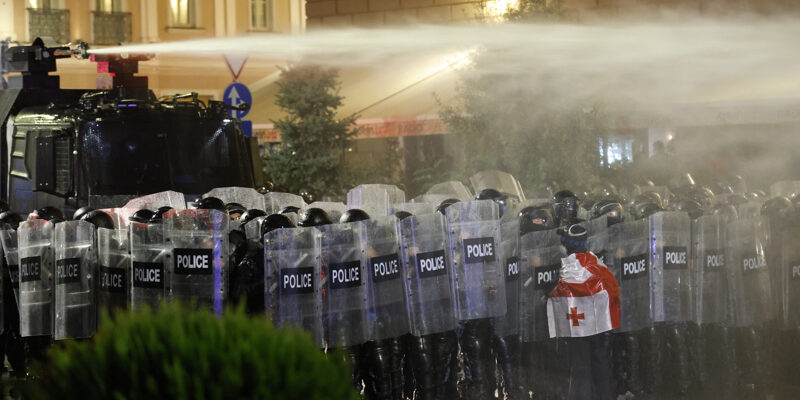
Opposition protest, resignation, and Pashinyan’s return: Armenia’s new parliament begins work
Politics
Opposition protest, resignation, and Pashinyan’s return: Armenia’s new parliament begins work
2 August 2026

The inaugural session of the ninth convocation of Armenia’s National Assembly took place in Yerevan. The new parliament began its work with a political protest: during the swearing-in ceremony, opposition representatives refused to stand or recite the oath, whereas deputies from the ruling party stood while doing so. That same day, Nikol Pashinyan’s government resigned, in accordance with the Constitution.

North Ossetian Police Launch Inquiry Into Threats Against Women Linked to Telegram Channel
Society
North Ossetian Police Launch Inquiry Into Threats Against Women Linked to Telegram Channel
1 August 2026

Police in Russia's North Ossetia have launched an inquiry following a campaign of online harassment targeting women through the Telegram channel Kavkazskaya Obshchina ("Caucasian Community"). The channel's administrators published women's personal information, insulted them and issued threats of violence over behaviour they claimed violated Caucasian traditions. 

Human Rights Advocates Question Investigators' Claims Linking Batalkhadzhins to the Caucasus Emirate
News
Human Rights Advocates Question Investigators' Claims Linking Batalkhadzhins to the Caucasus Emirate
1 August 2026

Russian law enforcement agencies have claimed that members of the Batalkhadzhin Sufi community were linked to the Caucasus Emirate*, a militant Islamist organisation. Human rights advocates, however, have questioned the allegations, noting that the group effectively ceased to exist more than a decade ago and that publicly available case materials contain little evidence of specific acts of support for militants.

Threat of Muslim Alkhazov's Deportation From Germany Raises Fresh Concerns Over the Status of Chechen Asylum Seekers in Europe
Human rights
Threat of Muslim Alkhazov's Deportation From Germany Raises Fresh Concerns Over the Status of Chechen Asylum Seekers in Europe
1 August 2026

Germany's decision to deport Chechen-born Muslim Alkhazov despite claims by his legal team that his family has been persecuted has sparked renewed concern among Chechen human rights advocates and members of the diaspora across Europe. They argue that the case could signal an emerging shift in how European authorities assess asylum claims filed by people from Chechnya.