Russia steps up pressure on Armenia as Matviyenko hints at travel advisory and Overchuk warns of further trade decline
“In the context of Russian-Armenian relations, instead of constructive dialogue we see attempts by Yerevan to raise the stakes or simply resort to blackmail,” Fadeyev said.
According to him, Moscow’s concerns include pressure on Russian businesses operating in Armenia, legal proceedings involving Russian companies and demands for financial compensation related to their assets.
Fadeyev also criticized Yerevan’s contacts with Kyiv, describing them as “demonstrative” and saying they raise questions about Armenia’s commitment to its alliance with Russia.
“We hope to see a more realistic and balanced approach,” he added.
Matviyenko warns against travel to Armenia
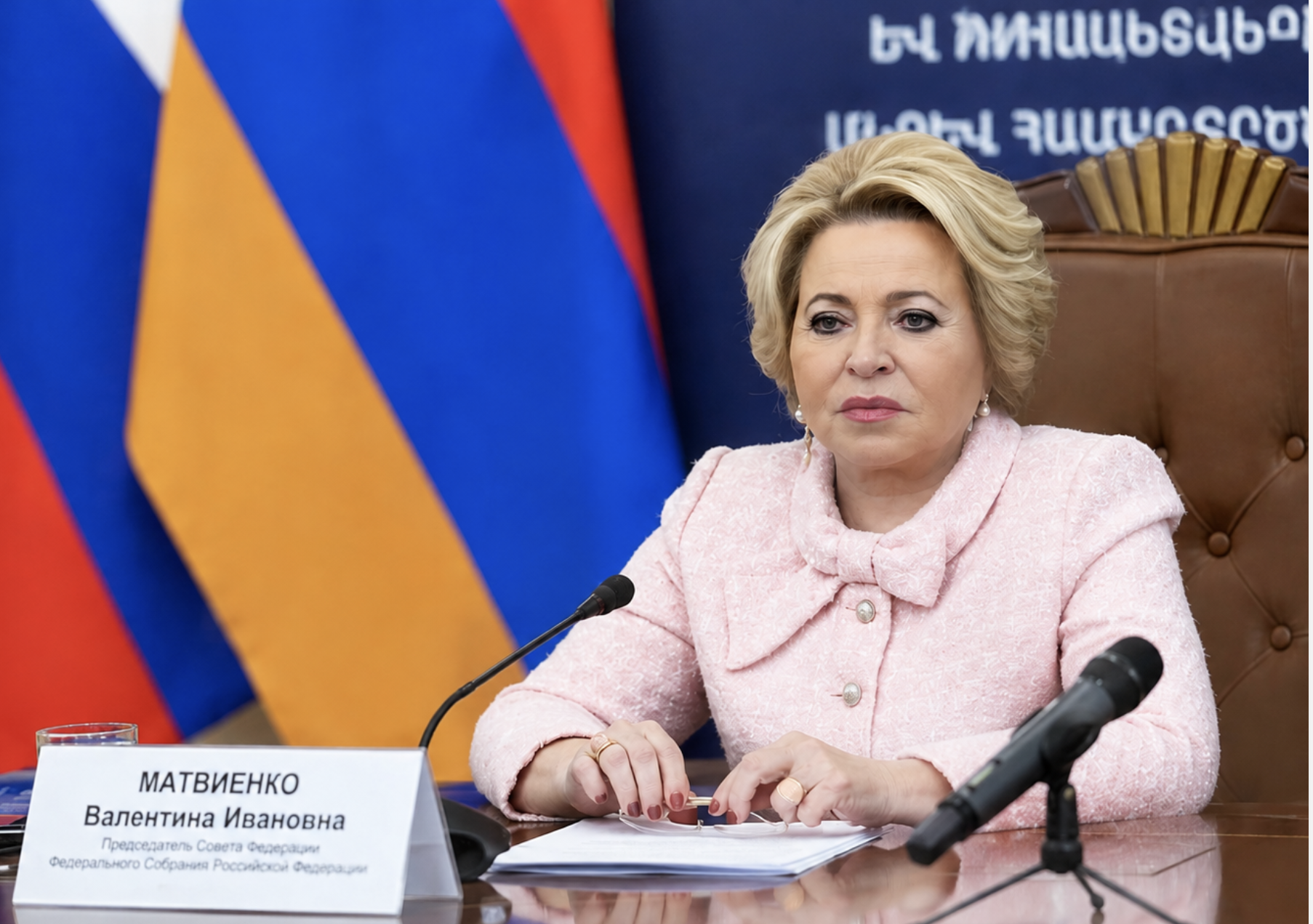
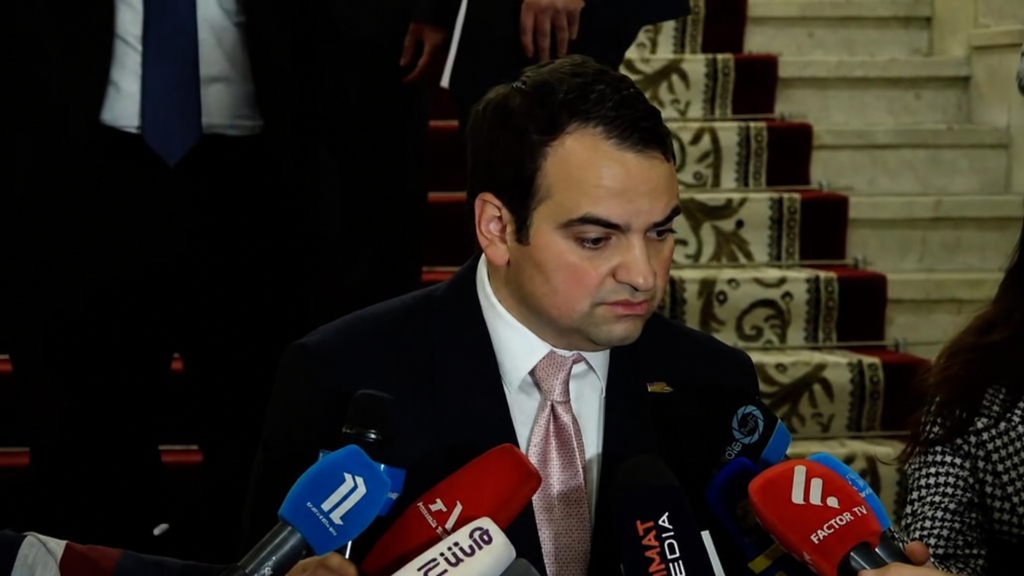
Almost simultaneously, Federation Council Speaker Valentina Matviyenko also criticized the Armenian authorities during a phone call with Armenian National Assembly Speaker Ruben Rubinyan.
According to the Russian upper house of parliament, Matviyenko described the current relationship between the two countries as “a one-way street,” arguing that Yerevan’s statements about the importance of ties with Russia are “often not matched by concrete actions.”
She focused in particular on what the Federation Council described as the repeated detention of Russian citizens in Armenia at the request of third countries. The statement warned that if the practice continues, Russia could officially advise its citizens to refrain from traveling to Armenia.
In mid-July, Armenian authorities detained Russian citizen Alexander Yermakov at Yerevan airport following a request from foreign law enforcement authorities in connection with an alleged cybercrime investigation. He remains in custody while Armenia’s Justice Ministry considers an extradition request.
Matviyenko also discussed Armenia’s ambitions to join the European Union, arguing that EU membership is incompatible with the principles governing cooperation within the Eurasian Economic Union (EAEU). At the same time, she expressed support for Prime Minister Nikol Pashinyan’s proposal to put the issue of EU membership to a nationwide referendum.
Moscow warns trade will continue to fall
The political dispute has coincided with a deterioration in economic ties.
Russian Deputy Prime Minister Alexei Overchuk described the decline in bilateral trade as “dramatic.”
According to Overchuk, trade between the two countries reached a record $12 billion in 2024 before falling to $8 billion in 2025. He said the decline has continued this year, claiming that bilateral trade has already dropped by roughly two-thirds compared with last year and is expected to shrink further.
Official Armenian statistics present a less severe picture.
According to Armenia’s Statistical Committee, trade with Russia fell by 21.5% year-on-year during the first five months of 2026, declining from $2.763 billion to $2.196 billion. Russia’s share of Armenia’s total foreign trade also decreased from 35.1% to 28%.
Meanwhile, the European Union’s share continued to grow. Between January and May, it increased from 11.9% to 16.7%, while Armenia’s trade with EU member states reached $1.355 billion. Trade also expanded with Belarus, Kazakhstan, Kyrgyzstan, Ukraine, Turkmenistan and Uzbekistan.
Trade restrictions add to tensions
The decline in trade has unfolded alongside a series of Russian import restrictions introduced since May.
Russia’s agricultural watchdog, Rosselkhoznadzor, has imposed restrictions on imports of Armenian flowers, alcoholic beverages, fish, mineral water, vegetables, herbs, berries, fresh fruit and dried fruit. Armenian dairy products were added to the list in July.
Yerevan has rejected the restrictions as unjustified. Prime Minister Nikol Pashinyan previously raised the issue with Russian President Vladimir Putin, arguing that the measures violate bilateral agreements and the rules of the Eurasian Economic Union, and asked Moscow to facilitate their removal.
Security cooperation has also become increasingly strained. Armenia has effectively suspended its participation in the Collective Security Treaty Organization (CSTO) for more than two years. As previously reported by New DOSH, Russian officials have suggested that the organization’s November summit could consider restricting Armenia’s rights within the alliance, including its voting rights.
Taken together, the latest statements suggest Moscow is simultaneously increasing political, economic and diplomatic pressure on Yerevan in an effort to force greater clarity over Armenia’s foreign policy orientation. Russia continues to argue that full membership in the European Union is incompatible with Armenia’s current participation in the Eurasian Economic Union, while the Armenian government insists it seeks closer ties with the EU without severing its economic relationship with Russia.