Georgian Metropolitan labels head of Russian Orthodox Church a war supporter, urges authorities to make way for the younger generation
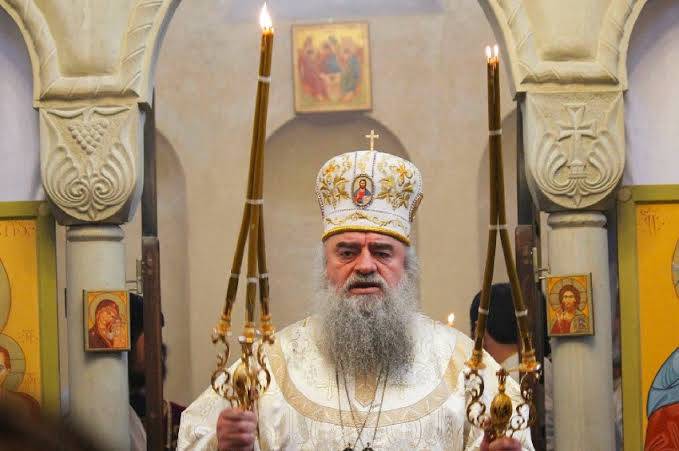
Metropolitan Iobi (Akiashvili) of Urbnisi and Ruisi is convinced that Patriarch Kirill of Moscow and All Rus' "blesses war and bloodshed." He made these remarks in an interview with TV Pirveli while commenting on the visit of a Georgian church delegation to Moscow for the jubilee of the head of the Russian Orthodox Church (ROC).
"All of this must be evaluated. Yes, he is the Patriarch of a vast country—Russia—but he has blessed this war and supported it. That is the kind of figure he is," Iobi stated.
The Metropolitan explained the decision to send a delegation from the Georgian Orthodox Church (GOC) to Moscow by citing potential diplomatic considerations.
"Well, I don’t know—perhaps this is one facet of diplomacy, possibly," he suggested.
In the same interview, the Metropolitan addressed attacks from supporters of the "Georgian Dream" party, which followed his criticism of the government. He asserted that he harbors no animosity toward those who disagree with him and intends to continue speaking what he believes to be the truth.
"I respond with love regardless; I hold no ill will toward them. I don’t know what they liked or didn’t like, but it is my duty to speak the truth. I was obligated to tell the truth, so I said all of this—as for who might have been hurt by this truth or who might have been pleased by it, I do not know. I don’t concern myself with that; my primary focus is my duty to speak the truth. <…>
Our young people are well-educated. It is time to yield this arena to the youth. We have a wonderful, educated younger generation—graduates of both Georgian and foreign universities—should we not clear the path for them?!" "The same old faces, endlessly," Iobi remarked indignantly.
The journalist also asked whether he viewed the violence against protesters and the adoption of repressive laws as a sign that "Georgian Dream" had run its course.
"What else could have prompted me to say that? Everything stemmed precisely from this. I once supported 'Georgian Dream' and stood by them, but when I saw that they had strayed from their path and the situation had fundamentally changed, it became necessary to speak out—to call them to account so that they might mend their ways. If they take these criticisms to heart and change occurs in Georgia, perhaps I might support them again—if they reverse these processes," the Metropolitan replied.
The catalyst for the escalating tensions between a segment of the clergy and the authorities was a sermon delivered by Iobi on November 10. In it, he criticized not only the government but also members of the church hierarchy.
The Metropolitan described the current administration as "non-believing and unchurched," asserting that state funding for the Georgian Orthodox Church creates a dependency that prevents clergy members from openly expressing their views. He also criticized the growing entanglement of church and state, the lack of transparency regarding church expenditures, the proliferation of gambling and drugs, and touched upon issues of demography and corruption.
Iobi stated that the country’s current leadership had exhausted its potential, and he urged that a more worthy government be elected in the future. At the same time, he acknowledged that he had personally supported the rise of "Georgian Dream" to power, viewing it as the "lesser evil" compared to the alternative.
Following the Metropolitan’s sermon, pro-government politicians, activists, and affiliated media outlets launched a wave of criticism against him. In particular, Iobi was accused of using the church pulpit for political statements and was labeled a supporter of former president Mikheil Saakashvili.
Lasha Natsvlishvili, an active supporter of "Georgian Dream" and a former PR consultant for the party, posted insults directed at the clergyman on social media. The Ministry of Internal Affairs initiated administrative proceedings against him for petty hooliganism. The court subsequently fined Natsvlishvili.