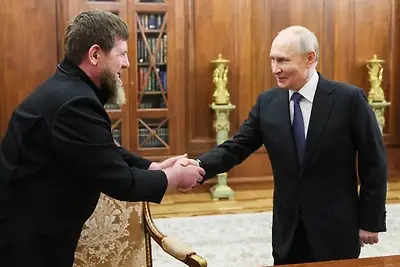
Chechen leader Ramzan Kadyrov congratulated Vladimir Putin on his birthday and stated that the Russian president's name holds "special significance" for the Chechen people. According to Kadyrov, the region will "never forget" the support Putin extended to his father—Chechnya’s first president, Akhmat-Khadzhi Kadyrov—"at a time when the future of the Chechen Republic depended on the decisions being made."
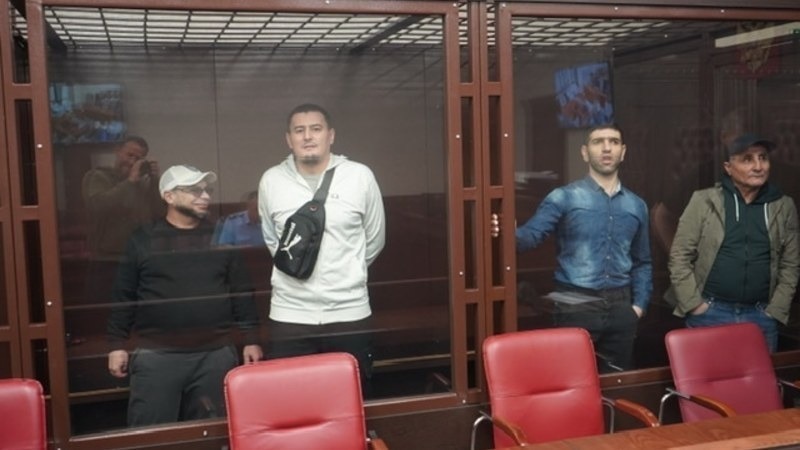
The defendants in the first Dzhankoy case of Hizb ut-Tahrir - activist Enver Krosh, journalist Vilen Temeryanov, Rinat Aliyev, Murat Mustafayev, Seityagi Abbozov and Edem Bekirov - are recognized as political prisoners. This was reported by the human rights project “Support for Political Prisoners. Memorial".
The Southern Military Court extended the arrest of the Crimean Tatars until February 29. According to investigators, Enver Krosh created a cell of the Islamic political party Hizb ut-Tahrir, banned in the Russian Federation, in the Dzhankoy region of Crimea. Rinat Aliyev, Seityaga Abbozov, Edem Bekirov and Vilen Temeryanov became its participants. The security forces said that the Crimeans intended to “create an ideal state of Muslims” and accused them all of preparing for a violent seizure of power.
The secret witness, presented under the pseudonym “Mustafayev,” was unable to answer questions during interrogation in the case of the first Dzhankoy group. Lawyer Emil Kurbedinov spoke about this. He emphasized that the witness with a high degree of probability “is an agent of the special services” and there was no reason to classify him.