The Georgian Prosecutor's Office has opened three criminal cases under the article on "failure to comply with the legal requirements of the temporary investigative commission of parliament"

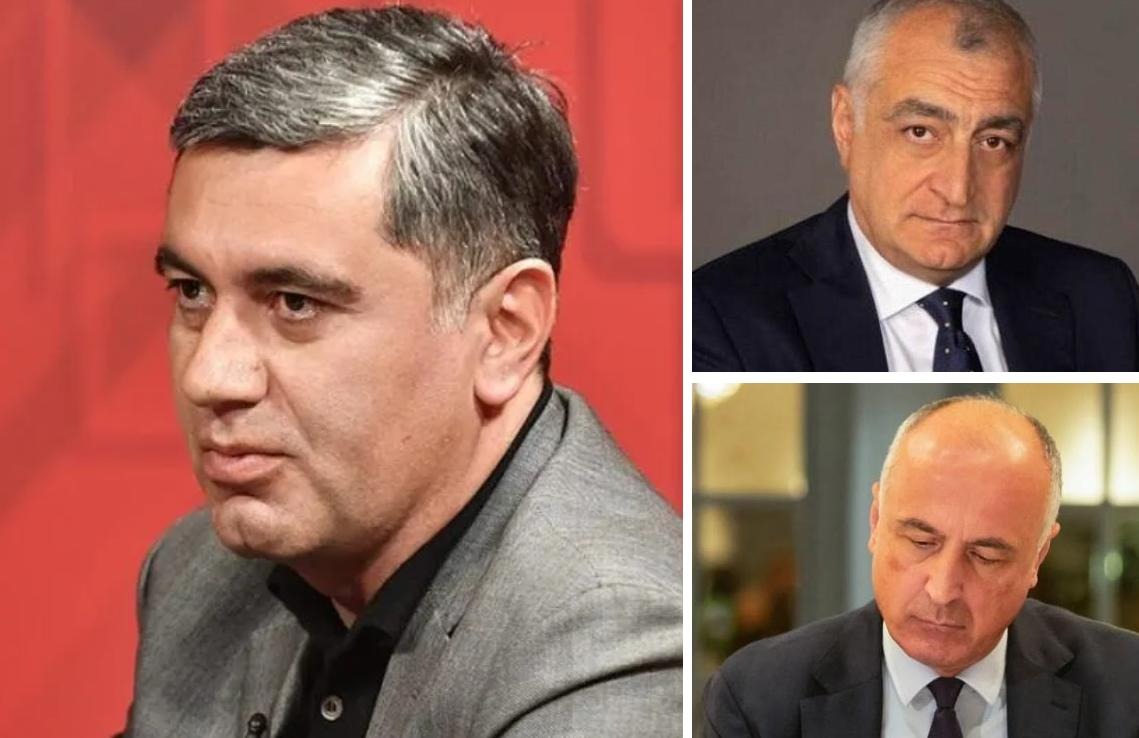
The Georgian Prosecutor's Office has opened a criminal case against Irakli Okruashvili, who served as the country's Minister of Defense from 2004 to 2006. He is accused of refusing to cooperate with the temporary parliamentary commission investigating alleged crimes by the authorities during the rule of the United National Movement. The leaders of the Lelo party, founders of TBC Bank Mamuka Khazaradze and Badri Japaridze have also been brought to criminal responsibility - they also did not appear at the commission meeting at the invitation of the deputies.

The defendants will be tried under Article 349 of the Criminal Code of Georgia - "failure to comply with the legal requirements of the temporary investigative commission of parliament". The punishment provided for under it is a fine or imprisonment for up to one year.

Recall that on March 25, a meeting of the investigative commission was held. at which the case of the Magnat gas station chain was considered. Its owner was businessman Dzhemal Leonidze. According to media reports, during the rule of the National Movement, the businessman's property was subject to confiscation and arrest. After being released as a political prisoner, Leonidze accused Mamuka Khazaradze and other members of the previous government of illegally appropriating property. Khazaradze did not show up for the meeting, stating on his Facebook page that he did not want to "participate in this circus." The deputies were also going to ask questions to Khazaradze's business partner and fellow party member, Badri Japaridze. However, the oppositionist, like his colleague, announced on social networks that he was refusing to appear before the commission, calling its activities a "slanderous show."
Последние новости
Georgia again rejected calls to join anti-Russian sanctions
Politics
Georgia again rejected calls to join anti-Russian sanctions
25 February 2026

Georgian Prime Minister Irakli Kobakhidze criticized Brussels' demands to join sanctions against Russia. He said these calls were inappropriate, given that the EU itself is a major importer of Russian products.

Ruben Vardanyan Drops Appeal Against 20-Year Sentence in Azerbaijan
Human rights
Ruben Vardanyan Drops Appeal Against 20-Year Sentence in Azerbaijan
25 February 2026

Billionaire and former Nagorno-Karabakh state minister Ruben Vardanyan, sentenced in Baku to 20 years in prison, rejected the legal force of the ruling and dropped his appeal. His family explained that this decision stemmed from the fact that, in their view, the trial was a "staged performance" rather than a proper trial: the hearings were held behind closed doors, without access to independent observers, and the prosecution's motions were ignored. The full text of the verdict was also not released.

Azerbaijani political prisoners appeal to the European Commission to address human rights in the country
Human rights
Azerbaijani political prisoners appeal to the European Commission to address human rights in the country
25 February 2026

A group of imprisoned activists and journalists from Baku's Penal Colony No. 2 has appealed to the President of the European Commission. They demand the implementation of European Parliament resolutions calling for the release of Azerbaijani political prisoners.

Chechnya Leads in Lowest Alcohol Sales
Economy
Chechnya Leads in Lowest Alcohol Sales
25 February 2026

In 2025, residents of the North Caucasus regions consumed the least amount of hard liquor in Russia. The lowest official retail sales figures were recorded in Chechnya (0.01 liters per capita). Other republics of the North Caucasus Federal District also demonstrated modest figures: Ingushetia - 0.7 liters, Dagestan - 2.2 liters, Kabardino-Balkaria - 2.6 liters, North Ossetia - 3 liters, and Karachay-Cherkessia - 3.4 liters. Experts attribute this decline to the prevalence of cultural and religious restrictions, as well as a preference for low-alcohol beverages.