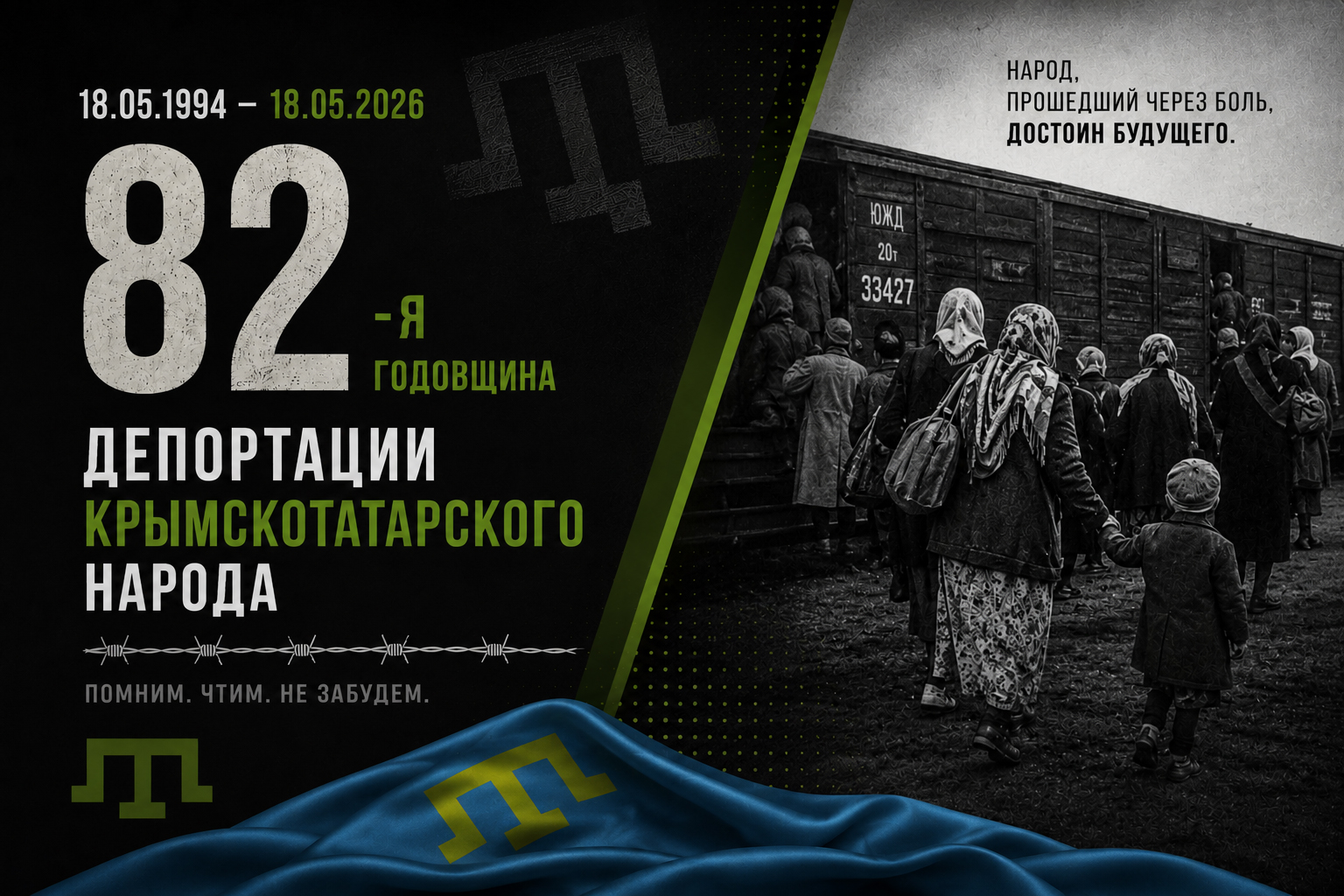
May 18 – Anniversary of the Deportation of the Crimean Tatar People
On May 18, 1944, the mass deportation of Crimean Tatars from Crimea began. By order of the Soviet authorities, hundreds of thousands of people were forcibly removed from their historical homeland to remote regions of the USSR – primarily to Uzbekistan, but also to Siberia and the Urals. The deportation took place under extremely harsh conditions: families were separated, people were transported in overcrowded freight cars, and many died en route and in the first years of exile.
For decades, Crimean Tatars were restricted in their right to return to Crimea. Despite this, the people managed to preserve their language, culture, traditions, and the memory of their native land. The mass return of Crimean Tatars only began in the late 1980s.
Today, 82 years after those events, the memory of the deportation remains particularly important. Since the annexation of Crimea in 2014, international human rights organizations and media have repeatedly reported on cases of pressure, arrests, searches, and persecution against members of the Crimean Tatar community. Many families once again faced anxiety, uncertainty, and a loss of security.
To mark another tragic anniversary, the Presidium of the Mejlis of the Crimean Tatar People issued a statement calling the repression and persecution in Crimea a continuation of Russia's genocidal policy against the Crimean Tatars. The document was published on Genocide Remembrance Day. It also calls on the international community to strengthen its support for Ukraine and more actively protect the rights of indigenous peoples.
"The catastrophic losses suffered by the Crimean Tatar people, when 46.2% of their population perished in the first years of exile, still resonate as an unhealing pain in every Crimean Tatar family... However, today, history once again takes on a tragic tone. For the past thirteen years—since the temporary occupation of Crimea in 2014—the Crimean Tatar people have once again faced systemic repression and persecution. Mass searches, arrests, politically motivated cases, enforced disappearances, the banning of the Mejlis of the Crimean Tatar People, the deliberate destruction of Crimean Tatar culture and identity, and the distortion of Crimean history are a direct continuation of Russian imperial policy aimed at displacing the indigenous people from their land," the statement reads.
The Mejlis emphasized that international recognition of the genocide committed by the Soviet regime in May 1944 serves as the most important legal basis for preventing similar crimes in the future. The Crimean Tatar Mejlis views this as a legitimate mechanism for protecting the indigenous people, who, as the statement notes, "under the conditions of the Russian occupation of Crimea, are once again under threat of annihilation." May 18th is a day of remembrance for the tragic pages of history, a day of respect for the resilience of the people, and a reminder of the importance of human rights, dignity, and the right of every people to preserve their culture, language, and identity.