Tbilisi and Moscow Return to Direct Negotiations
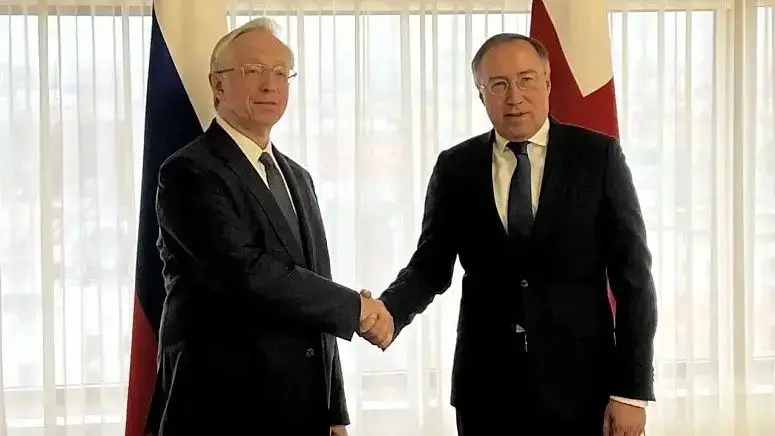
Russia and Georgia have resumed direct contacts at the level of foreign policy officials. The first meeting between the new special representative of the Georgian Prime Minister for relations with Russia, Giorgi Zurabashvili, and Russian Deputy Foreign Minister Mikhail Galuzin took place on November 19 in Minsk.
The talks were held within the framework of an informal bilateral dialogue, which Russia and Georgia initiated in 2012—four years after the war in August 2008. At that time, Georgia was represented by Zurab Abashidze, the Prime Minister’s special representative for relations with Russia, while Russia was represented by Deputy Foreign Minister Grigory Karasin. Based on the surnames of the initial participants, this negotiating mechanism became known as the "Abashidze-Karasin format." The parties used it to discuss trade, economic, transport, and humanitarian issues. Most of these meetings took place in Prague.
The last meeting under the previous format was held in December 2025. Following that, the position of the Georgian special representative remained vacant, effectively rendering the negotiating channel inactive. It was not until October 21, 2026, that Prime Minister Irakli Kobakhidze appointed Giorgi Zurabashvili to the post—a role he holds concurrently with his position as First Deputy Foreign Minister of Georgia. The talks in Minsk marked his first time representing the Georgian side in this new capacity.
The parties discussed economic ties, cultural and humanitarian cooperation, and regional security. According to the Russian Foreign Ministry, the participants reached a number of practical agreements and consented to continue their contacts. However, the ministry did not disclose the specific details of these agreements or the timeline for future negotiations. The Georgian administration specified that particular attention was paid to the Geneva International Discussions—the primary format for addressing unresolved issues between the two countries, primarily concerning security and the humanitarian situation. The Georgian side reaffirmed its intention to continue participating in meetings within this framework.
The choice of Minsk, rather than the customary Prague, raised questions even before the talks began. Since 2012, meetings within this bilateral dialogue had predominantly taken place in the Czech capital; this time, however, the venue was Belarus—an ally of Russia.
Georgian Foreign Minister Maka Bochorishvili stated that Tbilisi had no objections to Minsk as a meeting location. According to her, the priority was to hold the talks in a timely manner and begin addressing issues that affect the interests of Georgian citizens.
"This is the country with which we have the most numerous and serious problems. Naturally, it is impossible to resolve or settle any issues without conversation and dialogue," Bochorishvili said in an interview with the Imedi television channel.
She also urged against fearing contact with Moscow, emphasizing that the very act of engaging in dialogue should not be perceived as a threat.
The opposition viewed the talks as a step toward restoring relations with Moscow. Nika Gvaramia, leader of the "Coalition for Change," described the meeting as a de facto restoration of diplomatic relations. In his view, the appointment of Zurabishvili [to lead the process] and the holding of talks in Minsk signify a shift from informal communication channels with Russia to open, official-level engagement.
"When a deputy foreign minister meets with a Russian representative—and in Belarus, no less—that can only be described as the restoration of diplomatic relations," Gvaramia declared. Zurab Japaridze, another representative of the opposition "Coalition for Change," also criticized the negotiations. He pointed out that the Georgian delegation met with the Russian side without the participation of Western mediators, and stated that such a format could be a step toward the opening of a Russian embassy in Tbilisi.
Criticism also came from the Association of Diplomats of Georgia, which brings together former and current members of the diplomatic service. The organization described the appointment of a special representative and the choice of Minsk as "yet another clear sign of a shift in Georgia’s foreign policy course."
"Holding negotiations with an occupying state without international mediators, in the capital of a country that is an ally of Russia, is not merely a technical or organizational matter. It is a political choice—one that entails conducting negotiations under conditions favorable to Russia and acceptable to Moscow," the organization stated.
The Association further argues that such a dialogue is not aimed at securing the withdrawal of Russian troops from the occupied territories, but rather at normalizing relations on Moscow’s terms.