Fuel Crisis Eases in Southern Russia, but North Caucasus Still Faces Acute Shortages
The fuel crisis in southern Russia is gradually easing. Queues at petrol stations are shrinking, major fuel retailers are lifting or relaxing purchase limits, and regional authorities are increasingly declaring that supplies have stabilised. Yet officials and analysts caution that it is too early to declare the crisis over. While conditions have improved markedly in the Rostov, Volgograd and Astrakhan regions, motorists across the North Caucasus continue to face fuel shortages, hours-long queues and record-high petrol prices.
Russia’s largest fuel retailers are gradually returning to normal operations. Gazprom filling stations have removed all fuel purchase restrictions in the Astrakhan, Volgograd and Rostov regions, as well as in the Krasnodar and Stavropol territories and along the federal M-4 Don highway.
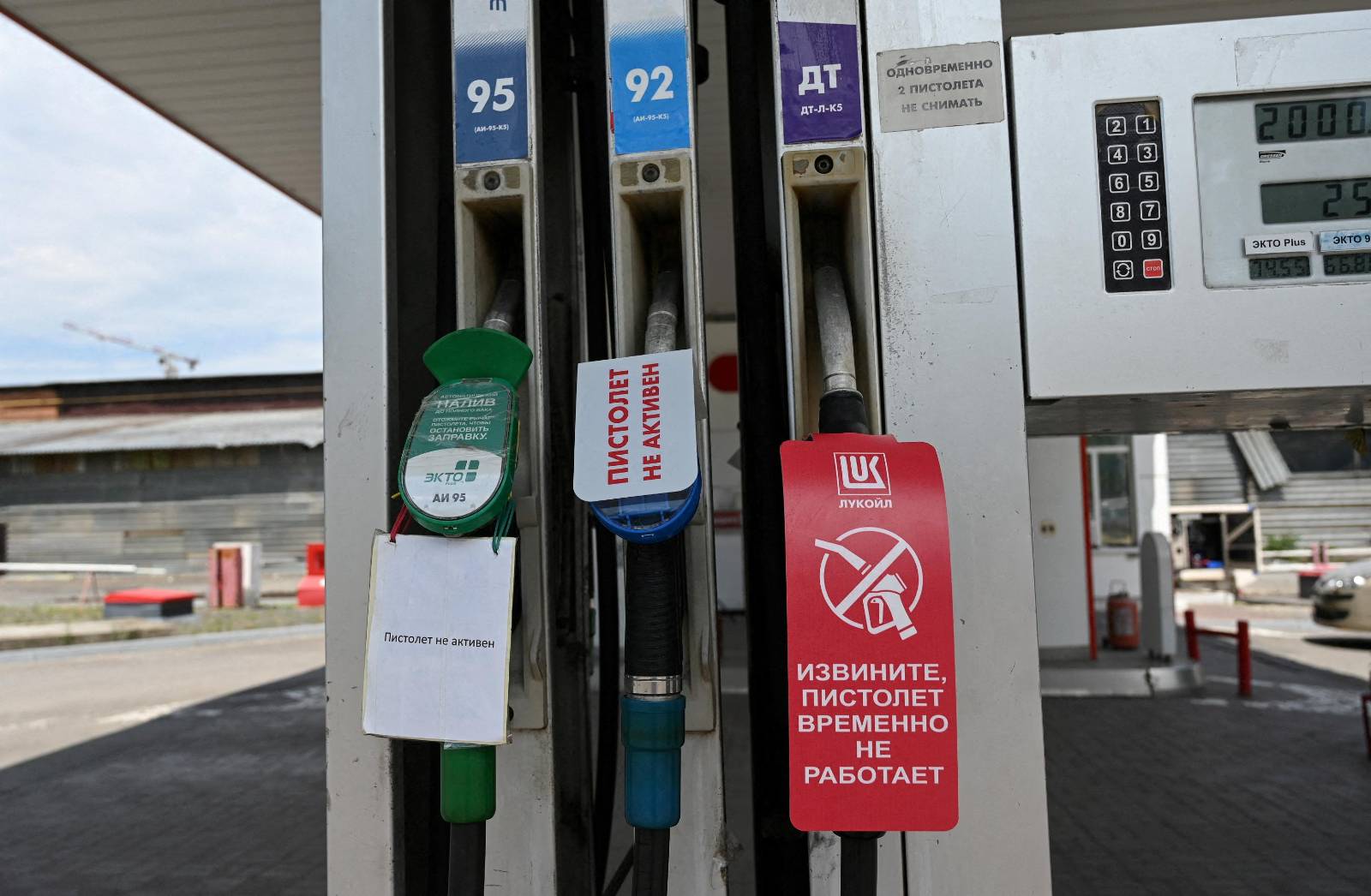
Rosneft and Bashneft have increased the fuel purchase limit from 30 to 50 litres per vehicle. Lukoil, however, has retained some restrictions in several regions, where rationing and alternating refuelling days based on vehicle registration numbers remain in place.
Astrakhan Leads the Recovery
Astrakhan Region has become one of the first areas to return to near-normal operations.
Authorities have scrapped the odd-even refuelling system introduced in early July, under which motorists were allowed to purchase fuel only on specific days depending on the final digit of their licence plate. Petrol stations have also resumed round-the-clock operations.
Governor Igor Babushkin said panic buying had subsided, most filling stations had resumed normal service, and waiting times had fallen significantly. Restrictions remain only at Lukoil stations, where motorists are still limited to 40 litres of petrol or 60 litres of diesel per vehicle.
Only two weeks ago, residents were spending hours in queues, lining up even outside closed petrol stations. Many abandoned the use of private vehicles altogether and switched to public transport.
Volgograd Lifts All Limits
The situation has also largely normalised in the Volgograd Region.
From 28 July, both Gazprom and Lukoil filling stations removed all remaining fuel purchase limits. Regional authorities said fuel supplies had stabilised, although efforts to improve delivery logistics continue.
At the height of the crisis, motorists were initially restricted to purchasing no more than 20 litres of petrol, with the limit later raised to 30 and then 40 litres.
Stavropol Returns to Business as Usual
Officials in Stavropol Territory also say the situation is stabilising.
According to the regional government, daily demand for AI-92 and AI-95 petrol, as well as diesel fuel, has returned to its normal level of around 2,500 tonnes. Prices at major retail filling stations remain unchanged.
Governor Vladimir Vladimirov has lifted earlier restrictions on the use of government vehicles by public officials. Regional authorities are also developing an online platform that will allow residents to monitor fuel availability at petrol stations in real time.
North Ossetia: Improvement, but Queues Persist
North Ossetia is also showing signs of recovery compared with neighbouring regions.
Authorities have raised the fuel purchase limit from 40 to 50 litres for residents of North and South Ossetia, while motorists from other regions can now buy up to 30 litres instead of the previous 20.
The improvements, however, have not eliminated shortages. Even after restrictions were eased, queues of 30 to 40 vehicles continue to form outside some filling stations in Vladikavkaz.
Only a week earlier, more than a quarter of all petrol stations in the republic had run out of fuel.
Regional head Sergei Menyaylo says petrol prices in North Ossetia are almost half those in neighbouring Kabardino-Balkaria. Residents, however, report on social media that actual prices are considerably higher than official figures suggest and that many stations still run out of fuel by evening.
Kabardino-Balkaria Remains the Epicentre
While much of southern Russia is gradually returning to normal, Kabardino-Balkaria continues to experience the most severe shortages.
Despite statements by Russia’s Energy Ministry that the fuel market is stabilising, residents continue to report long queues and petrol prices reaching 140–150 roubles per litre at privately owned filling stations.
Motorists say fuel at the lower prices charged by major retail chains can only be purchased after waiting several hours.
Residents also point to stark differences with neighbouring regions, saying privately operated stations in Ingushetia, North Ossetia and Chechnya are selling fuel at significantly lower prices.
The wide variation in prices between filling stations within Kabardino-Balkaria itself has become another source of public frustration.
Why Restrictions Remain
Energy analysts say it is still too early to declare the crisis over.
Dmitry Gusev, deputy chairman of the supervisory board of the Reliable Partner association, argues that the remaining restrictions no longer cause serious inconvenience for motorists while helping prevent another wave of panic buying.
Sergei Tereshkin, chief executive of Open Oil Market, believes restrictions on diesel fuel are likely to be lifted first. Because diesel exports remain restricted, domestic supplies are recovering faster than the petrol market.
Most analysts agree that removing all limits before the end of the peak summer travel season, expected to last until around October, would be premature.
Switching to Gas Is No Silver Bullet
As authorities work to restore fuel supplies, many motorists have sought their own solution by converting their vehicles to run on compressed natural gas.
Across southern Russia and the North Caucasus, waiting lists at conversion workshops have stretched to several weeks. Demand has become so strong that some drivers have turned to unlicensed installers.
Energy experts warn, however, that a mass shift to gas-powered vehicles cannot solve the petrol shortage. Alexander Frolov, deputy director-general of the Institute of National Energy, says the existing infrastructure is not designed to handle such a sharp increase in demand, and expanding it quickly is impossible.
Igor Yushkov, a leading analyst at the National Energy Security Fund, believes the rush to install gas equipment will prove temporary. In his view, interest in vehicle conversions will gradually decline once fuel supplies fully recover.
Despite the first signs of improvement across southern Russia, analysts say the fuel crisis is far from over. Most expect restrictions to remain in place at least until the end of the summer season, while the North Caucasus continues to be the region hardest hit by persistent fuel shortages.