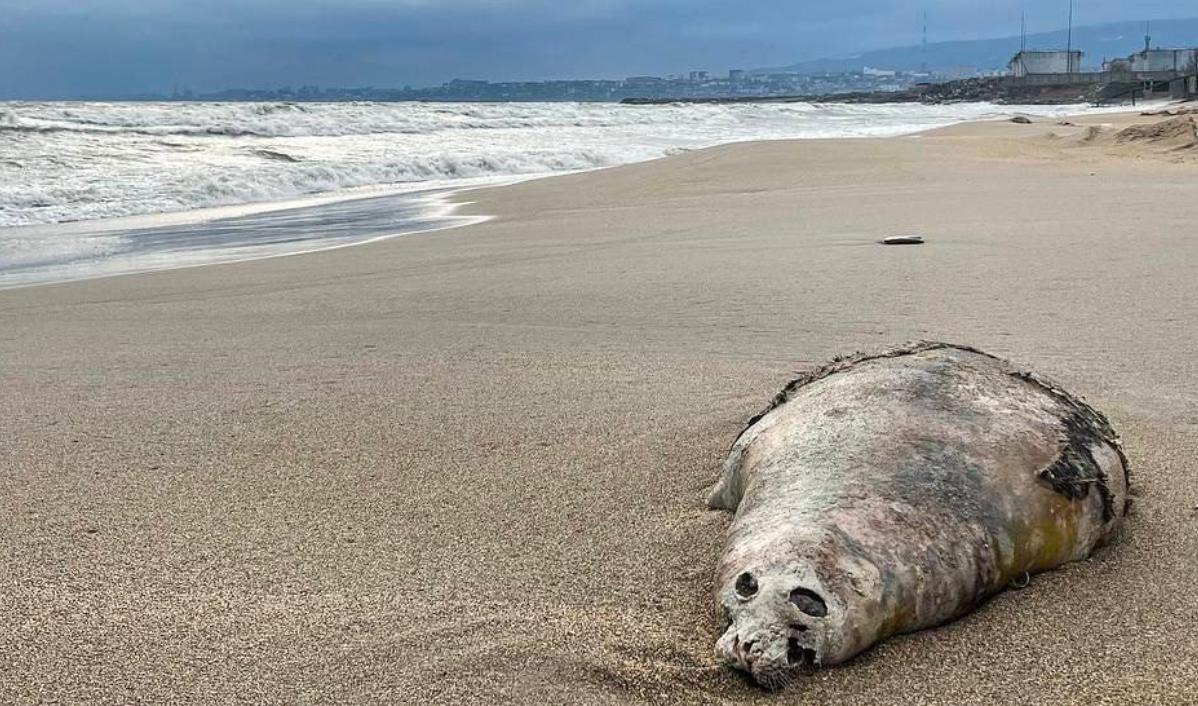
The cause of the mass death of Caspian seals has been established
Most often, seals, including those in the Caspian Sea, die due to disease. This was reported by the deputy director of the Kompas Foundation, Rashida Yabbarova, live on the air of the program "Living Nature with Edgard Zapashny" on Sputnik radio.
The most common disease is bird flu. The seals' immunity is weakened by the virus due to the large number of seagulls. According to Yabbarova, there is practically no poaching in the Caspian Sea now. It is difficult for violators of the law to hunt: there are very few Caspian seals. Fishermen who go to sea say that seals can only be seen from a great distance.
In December 2024, specialists from the Ministry of Natural Resources of Dagestan discovered a large number of dead seals on the coast of the Caspian Sea. Experts have stated that underwater earthquakes and gas emissions along their migration route could be one of the probable causes of the animals' deaths.
In 2022, 2.5 thousand rare seal carcasses washed up on the Caspian coast in Dagestan. Their dead carcasses could not be removed for a long time. At first, the cause of the seals' death was said to be a methane release into the sea. Then a version appeared according to which the seals could have died en masse due to bird flu.