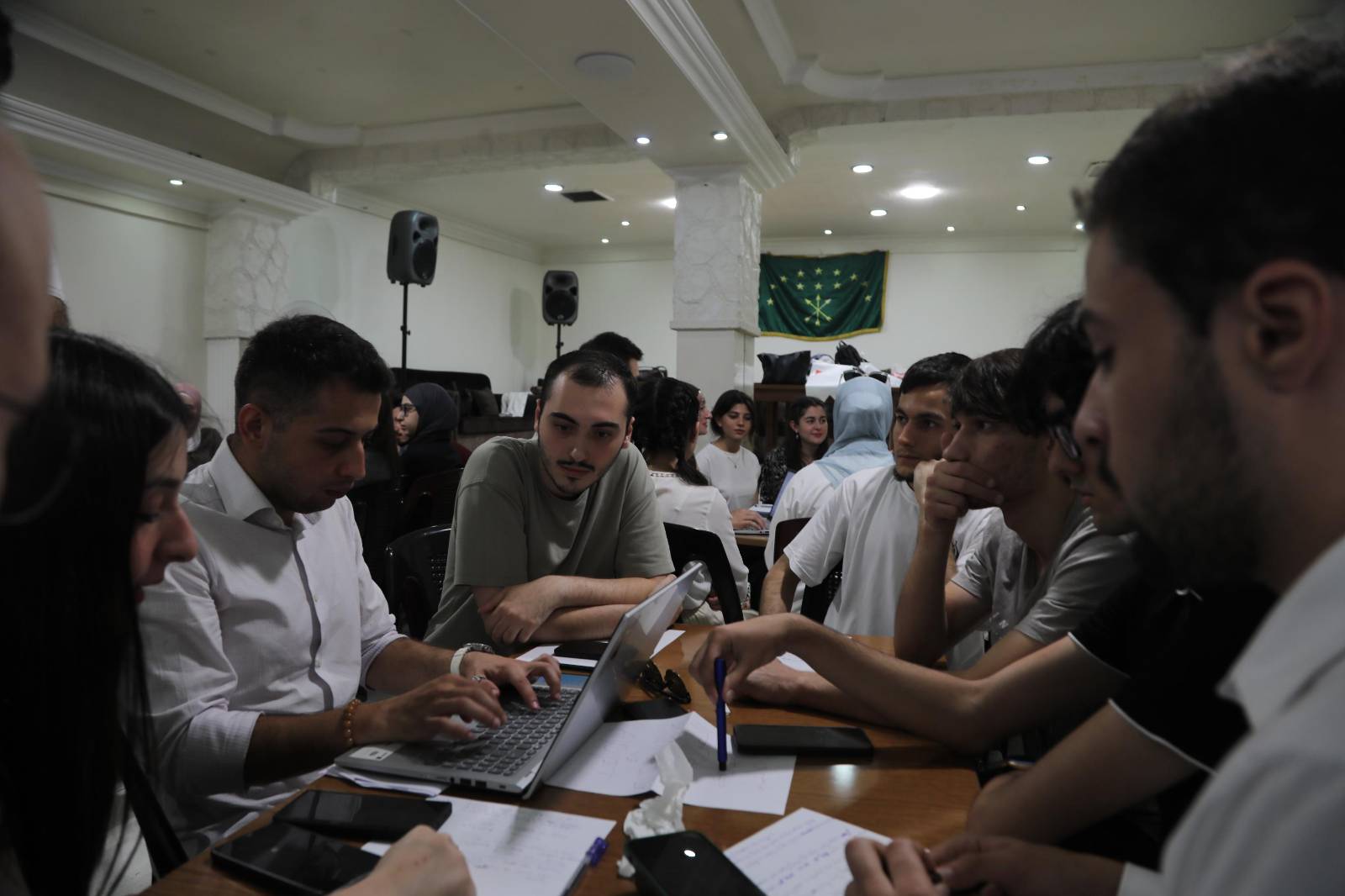
Circassian youth from Syria and Turkey have held their first international gathering in Damascus since the change of power in the country, bringing together young members of the diaspora to strengthen cultural ties, foster dialogue, and discuss future cooperation.
The programme was organized by Turkey's Kafkas Vakfı (Caucasus Foundation) and brought together around 70 participants. Twenty young delegates travelled from Turkey, while about 50 others joined from different parts of Syria.
Among those attending were Syrian Circassians who were born in Syria but educated in Turkey and were able to return to their ancestral homeland for the first time in many years.
Organizers said the event aimed to build a "youth bridge" between the two countries by promoting cooperation and developing a shared vision for the future. Discussions focused on national identity, cultural preservation, historical memory, youth leadership, international cooperation and joint development strategies.
Sarah Abdelmajid, a political science student, said that political changes in Syria had given young people greater freedom to express their views and play a more active role in public life. She said the meeting placed particular emphasis on developing young leaders and expanding opportunities for international cooperation.
Abdelmajid also said the Circassian community now has greater opportunities to preserve its cultural heritage, adding that interest in Circassian history and identity has grown noticeably within Syrian society, driven in part by social media.
Serra Özdemir, a representative of the Kafkas Vakfı, said she was particularly impressed by the determination of the Syrian participants. According to her, many are optimistic about the country's future and are eager to work on joint initiatives to preserve the Circassian language, history and cultural heritage, including through the use of digital technologies.
Another member of the Turkish delegation, Yasin Güneş, said young Syrian Circassians were eager to contribute to the country's reconstruction. During their visit, the delegation also toured Damascus's historic centre, including the Old City and the Umayyad Mosque.
Participant Mey Abaza said the change of power had given the Circassian community greater freedom to preserve and publicly express its national identity. She noted that commemorative events, which had previously faced restrictions, can now be held openly, including marches and memorial ceremonies dedicated to the tragic chapters of Circassian history.
Syria's Circassian community is considered one of the largest in the Middle East. Before the outbreak of the country's civil war, its population was estimated at between 80,000 and 100,000 people. Most are descendants of Circassians from the North Caucasus who resettled in the Ottoman Empire following the Caucasian War in the 19th century.
A significant proportion of the community lives in Damascus, the Golan region and several towns and villages in southern Syria. Since the conflict began in 2011, many Syrian Circassians have emigrated to Turkey, Jordan and other countries. Despite this, cultural links between Circassian communities have remained strong and continue to develop.