Moscow again puts Armenia before a choice between the EAEU and the European Union

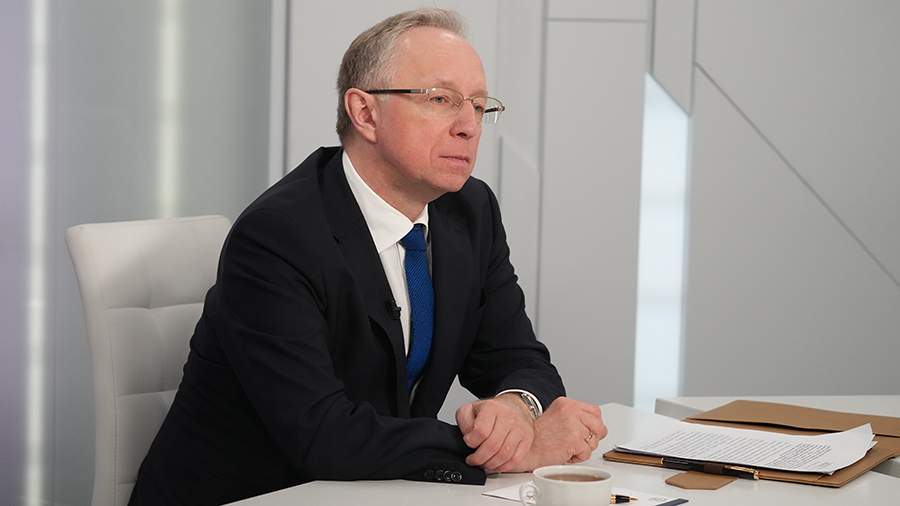
Simultaneous membership of Armenia in the EU and the EAEU is impossible. This was recalled by Deputy Foreign Minister of the Russian Federation Mikhail Galuzin.

“Our Armenian colleagues will probably have to decide at some point which direction they are going. This is our ally, a strategic partner, with whom we are connected, just like with Georgia, by a centuries-old common history, a common victory in the Great Patriotic War, the 80th anniversary of which we will, I hope, celebrate together on May 9,” Galuzin said.

He warned that Armenia’s decision to follow the path of European integration will entail a revision of the established economic relations that Yerevan currently has with its partners along the EAEU line.

“This will probably be a rather painful process, including, unfortunately, for the population of Armenia. It is logical to assume that the country's leadership will explain to its population what it can lose by leaving the EAEU, and what it can actually gain from membership in the European Union," the official shared his thoughts.

Recently, Armenian President Vahagn Khachaturyan signed a law on the beginning of the country's accession process to the European Union.

"The Republic of Armenia, seeking to develop democratic institutions, improve the welfare of society, strengthen security, sustainability and the rule of law, announces the beginning of the process of the Republic of Armenia's accession to the European Union," the document says.

Recall that, according to Prime Minister Nikol Pashinyan, the adoption of the law does not mean automatic accession of Armenia to the European Union - the final decision can only be made in a referendum. He also noted that Armenia "feels good" as part of the EAEU and is interested in developing relations with Iran, but at the same time, "a certain and sensitive part of the population" strives for a European future for the country.
Последние новости
Georgia again rejected calls to join anti-Russian sanctions
Politics
Georgia again rejected calls to join anti-Russian sanctions
25 February 2026

Georgian Prime Minister Irakli Kobakhidze criticized Brussels' demands to join sanctions against Russia. He said these calls were inappropriate, given that the EU itself is a major importer of Russian products.

Ruben Vardanyan Drops Appeal Against 20-Year Sentence in Azerbaijan
Human rights
Ruben Vardanyan Drops Appeal Against 20-Year Sentence in Azerbaijan
25 February 2026

Billionaire and former Nagorno-Karabakh state minister Ruben Vardanyan, sentenced in Baku to 20 years in prison, rejected the legal force of the ruling and dropped his appeal. His family explained that this decision stemmed from the fact that, in their view, the trial was a "staged performance" rather than a proper trial: the hearings were held behind closed doors, without access to independent observers, and the prosecution's motions were ignored. The full text of the verdict was also not released.

Azerbaijani political prisoners appeal to the European Commission to address human rights in the country
Human rights
Azerbaijani political prisoners appeal to the European Commission to address human rights in the country
25 February 2026

A group of imprisoned activists and journalists from Baku's Penal Colony No. 2 has appealed to the President of the European Commission. They demand the implementation of European Parliament resolutions calling for the release of Azerbaijani political prisoners.

Chechnya Leads in Lowest Alcohol Sales
Economy
Chechnya Leads in Lowest Alcohol Sales
25 February 2026

In 2025, residents of the North Caucasus regions consumed the least amount of hard liquor in Russia. The lowest official retail sales figures were recorded in Chechnya (0.01 liters per capita). Other republics of the North Caucasus Federal District also demonstrated modest figures: Ingushetia - 0.7 liters, Dagestan - 2.2 liters, Kabardino-Balkaria - 2.6 liters, North Ossetia - 3 liters, and Karachay-Cherkessia - 3.4 liters. Experts attribute this decline to the prevalence of cultural and religious restrictions, as well as a preference for low-alcohol beverages.