Georgian authorities have stated that Russia began the war on August 8, not August 7. The opposition calls this a Kremlin narrative
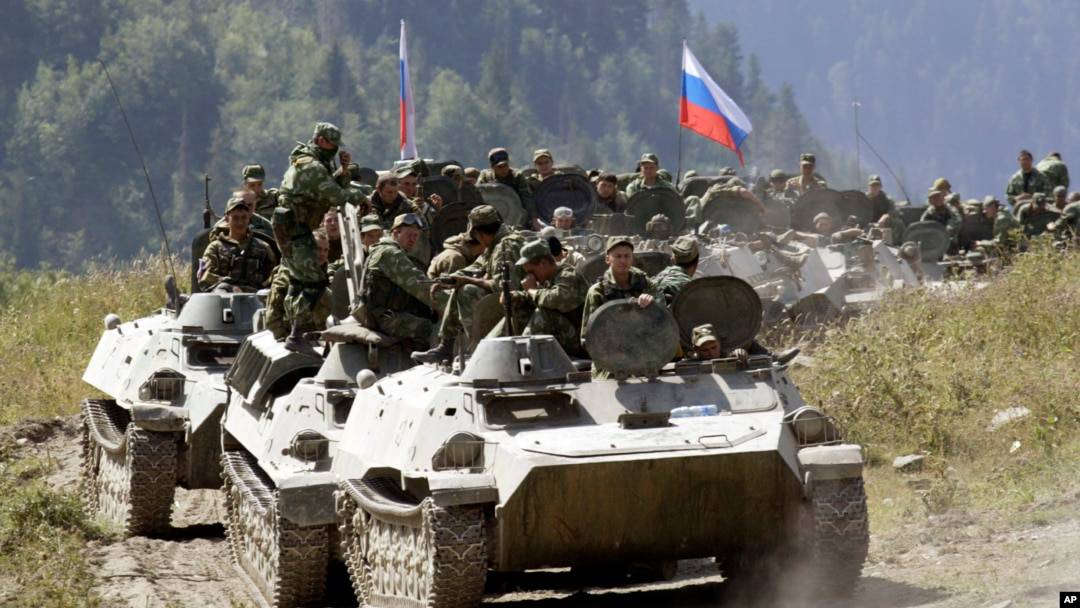
Mamuka Mdinaradze, a Georgian minister, stated that the 2008 Russo-Georgian war began on August 8, not August 7. According to him, it was on the 8th that regular Russian troops invaded Georgia. Previously, representatives of the Georgian authorities had placed the blame for the start of the war not on Russia, but on the government of then-President Mikheil Saakashvili—which they term a "criminal regime."
"The Russo-Georgian war began on August 8, 2008. It lasted five days and ended on August 12. Consequently, the Russo-Georgian war took place from August 8 to August 12, 2008," Mdinaradze concluded.
He notes that documentary evidence confirms this timeline: the Russian army, he says, invaded Georgia on August 8, after which the occupation of territories and military hostilities began. At the same time, the minister emphasized that the Russian invasion cannot be justified by the actions of the Georgian side.
"No pretext or reason justifies Russia's invasion of Georgia," Mdinaradze declared.
Russia, he is convinced, "had absolutely no right to invade."
August 7 remains the main point of contention. On that day, the politician claims, Saakashvili ordered the shelling of Tskhinvali.
"As for August 7: on August 7, Mikheil Saakashvili issued an order, and pursuant to that order, bombardments were carried out against Tskhinvali—an act that, in my opinion, he deliberately demonstrated to the entire world. That is a factual reality." "On August 7, he carried out a bombardment in the direction of Tskhinvali—broadcast live on television—thereby creating direct evidence himself," said Mdinaradze.
At the same time, the minister acknowledged that the situation had remained extremely tense for several days prior to August 8 and that Russia had also played a part in the escalation.
"There was an escalation from August 1 to 7, for which Russia also bears responsibility," he stated.
According to Mdinaradze, shelling took place in the region on August 5 and 6, resulting in injuries and fatalities. However, the minister believes that Saakashvili still had no grounds to launch a massive operation.
"Yes, there was shelling; yes, there were injuries—including on August 5—and two people were killed on the 6th. Despite this, no one even mentioned a UN Security Council meeting or took any steps to justify their country's actions. Instead, he [Saakashvili] launched a massive bombardment without having a shred of evidence regarding the presence of the regular Russian army in Georgia. They talk about it now, but those words are not documented anywhere," Mdinaradze emphasizes.
The debate over exactly which day marks the start of the war has continued for years. In its investigation, the international EU commission led by Swiss diplomat Heidi Tagliavini described the conflict as the result of a prolonged escalation and noted that large-scale hostilities began on the night of August 7–8 following a Georgian artillery strike on Tskhinvali. The commission also specifically examined the issue of the Russian military presence in the region prior to the start of the Georgian operation.
The European Court of Human Rights, in its analysis of the conflict's aftermath, defines its active phase as the period from August 8 to August 12, 2008. The court also established Russia’s liability for a number of human rights violations during the subsequent occupation and after active hostilities had ceased.
Thus, the phrasing regarding the "start of the war on August 8" does not in itself imply that the events of August 7 are not considered part of the conflict. The discrepancy in dates stems from differing views on what constitutes the starting point: the onset of large-scale hostilities, the Georgian operation in Tskhinvali, or the Russian military intervention.
For the current Georgian authorities, this issue also carries political significance. In recent years, "Georgian Dream" has consistently accused the Saakashvili administration of provoking the war through its actions. The opposition, conversely, views this interpretation as an attempt to shift responsibility from Russia to Georgia—and points to it as a key narrative that aligns with the Russian version of events.