War Reaches the Caspian: What Ukraine's Strikes Mean for Southern Russia
Reported Ukrainian strikes on targets in the Caspian Sea may signal a widening of the geography of the Russia-Ukraine war and pose additional risks for the entire Caspian region. Beyond military assets, shipping, oil production and the "North-South" international transport corridor — which runs through ports in Russia's Astrakhan region and Dagestan — could also potentially be at risk.
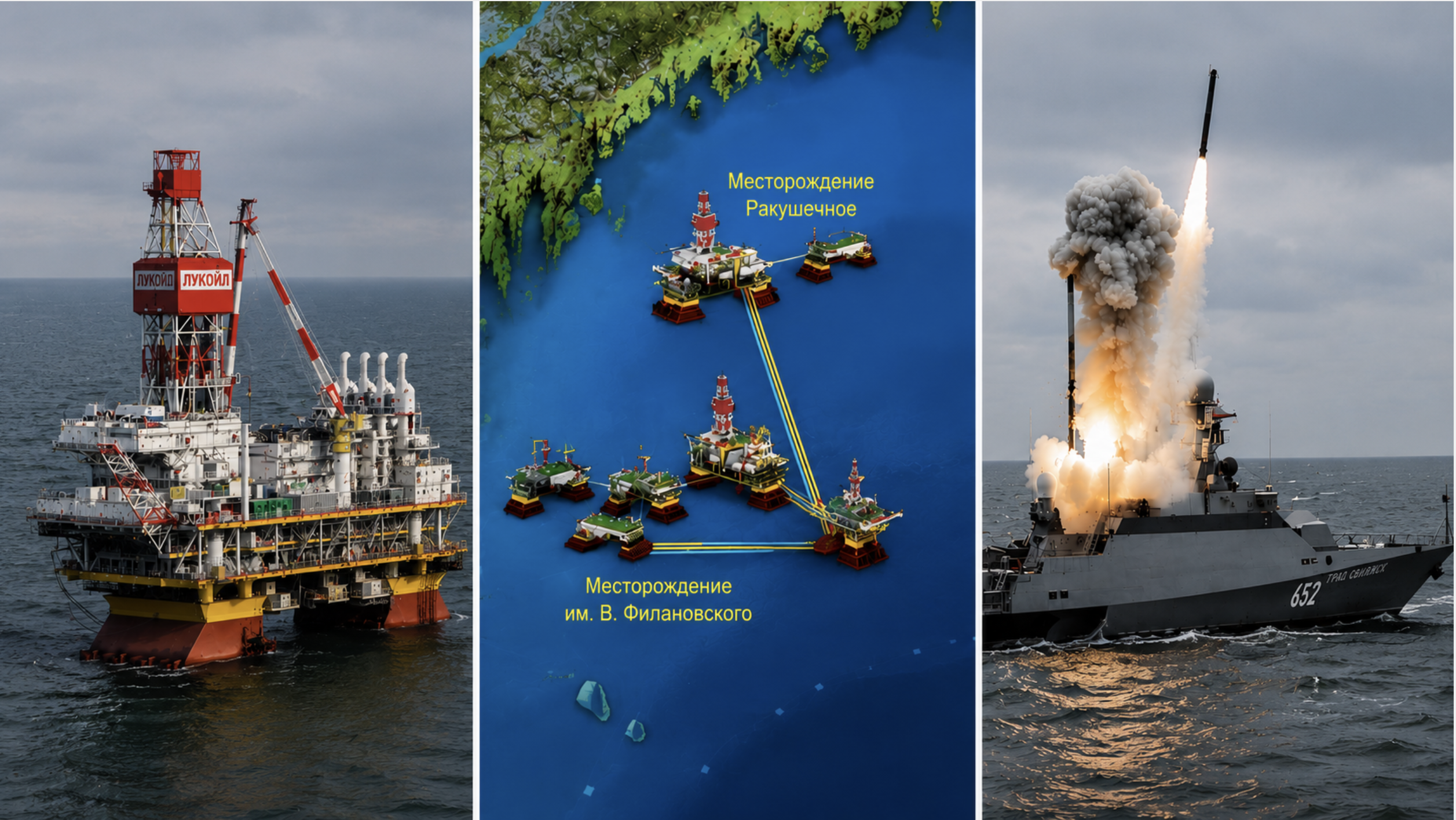
Ukraine's Security Service (SBU) said its drones struck the Yuri Filanovsky oil platform, operated by Russia in the northern Caspian, along with cargo vessels that Kyiv says were being used to transport military goods between Russia and Iran. A Russian Project 12418 "Molniya" missile boat was also named among the targets.
Ukrainian President Volodymyr Zelensky had previously said strikes had hit ships involved in transporting military cargo linked to Iran, as well as a Russian naval vessel.
Tehran, for its part, said one sailor was killed and another wounded in an attack on a commercial vessel in the Caspian. Iran's foreign ministry described the incident as a "hostile and criminal act," accused Kyiv of trying to widen the war's geography, and delivered a note of protest to Ukraine's chargé d'affaires.
Ukraine has not said it struck an Iranian civilian vessel specifically. The accounts from Kyiv and Tehran therefore diverge for now, and no independent confirmation of the full circumstances was available at the time of publication.
Why it matters for the North Caucasus
Although there have been no reports of shipping being halted on the Caspian, the incident touches one of Russia's key transport routes.
The northern Caspian carries shipping traffic between Iranian ports and the Russian ports of Astrakhan, Olya and Makhachkala. This route forms a key link in the western branch of the "North-South" international transport corridor, which Moscow views as an alternative to traditional shipping through the Suez Canal.
The route holds particular importance for Dagestan. Makhachkala's commercial seaport remains Russia's only ice-free port on the Caspian and has significantly expanded its cargo traffic to Iran in recent years.
As of publication, no official statements had been issued announcing shipping restrictions or a halt to operations at Russian ports. Kazakhstan, Azerbaijan and Turkmenistan likewise reported no changes to navigation in their territorial waters.
Oil production and logistics
Beyond shipping, potential risks also extend to the region's oil and gas infrastructure.
According to the SBU, one target of the operation was the Yuri Filanovsky platform, the largest field operated by Lukoil in the Russian sector of the Caspian Sea.
Neither Lukoil nor relevant Russian agencies had, at the time of publication, reported any damage to the platform, changes in output, or a suspension of operations. There is likewise no confirmation yet that the strike affected oil production.
Analysts note that the Caspian incident comes just days after a series of attacks on infrastructure belonging to the Caspian Pipeline Consortium (CPC) near Novorossiysk.
In that earlier episode, drones struck tankers loading Kazakh oil. Loading was temporarily suspended, forcing Kazakhstan to cut production; Astana later sharply condemned the attacks, calling them a threat to international trade and global energy security.
Although those events took place in the Black Sea, they have already had ripple effects across Caspian oil logistics, since most Kazakh oil exports move through CPC infrastructure.
There are, for now, no signs of large-scale disruption to shipping in the Caspian basin. Even so, the reported strikes on Caspian targets themselves point to a possible widening of the conflict's geography.
Even if these events do not lead to disruptions at ports or oil and gas facilities, they add further risk to the North-South transport corridor, which carries trade flows between Russia, Iran and countries in South Asia. As of publication, there had been no official confirmation of disruptions at the ports of Astrakhan, Olya or Makhachkala, nor of restrictions on international shipping.