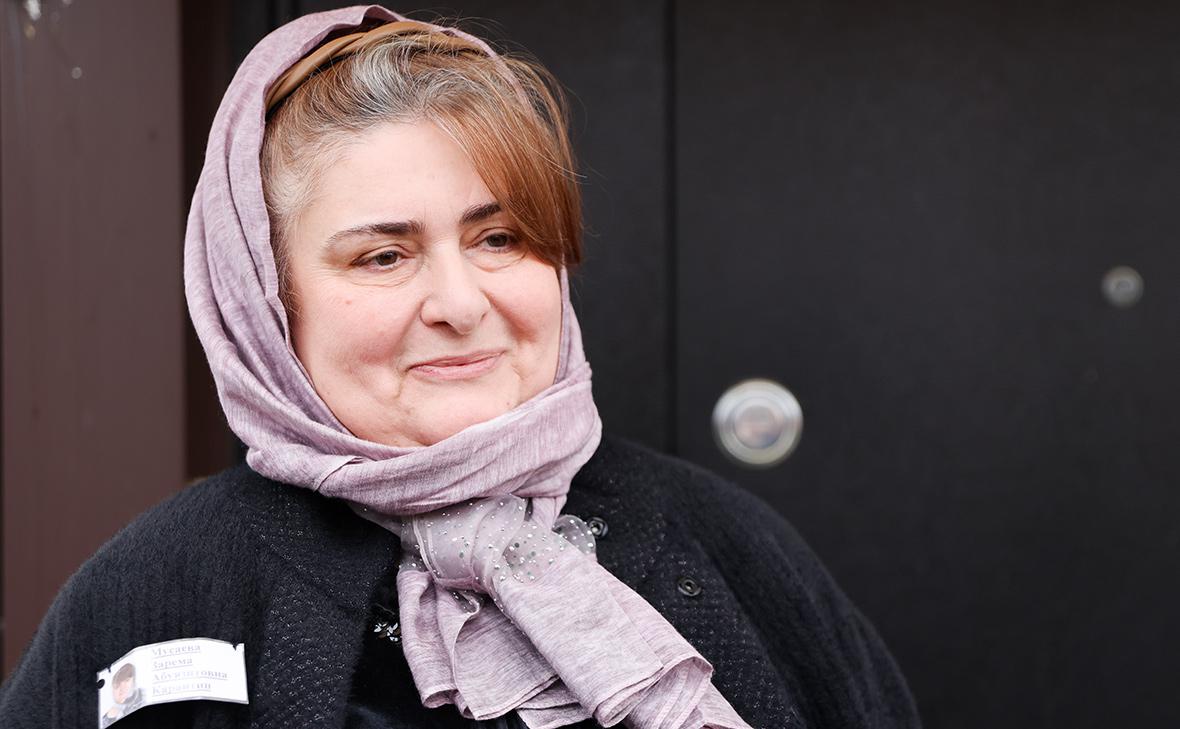
Zarema Musayeva asked not to be sent to a penal colony-settlement

Zarema Musayeva, accused of disrupting the activities of the colony (Part 2 of Article 321 of the Criminal Code), gave her final statement in the Shali City Court of Chechnya. She asked not to be sent to penal colony-settlement No. 3, where she had previously served her sentence and where the FSIN employee who accused her of assault works. Musayeva fears for her life in this colony.

“I have one huge request to the director of the FSIN - that they not send me to penal colony-settlement No. 3. I fear for my life. I beg everyone who can help me to help me, and I will not end up there,” the defendant said.

Earlier, the state prosecution asked to sentence her to four years. The court retired to a deliberation room, the verdict will be announced on August 6.

According to investigators, Musayeva, while seriously ill, attacked an FSIN officer and scratched his neck, but the people questioned as witnesses did not see this.

Zarema Musayeva is the wife of former federal judge Saidi Yangulbaev and the mother of Chechen activists Abubakar, Ibragim, and Baysangur Yangulbaev. In early March 2024, the Pyatigorsk Cassation Court reduced her sentence on the previous charge, reducing her prison term from 5 years to 4 years and 9 months. In July 2023, a court in Grozny found the woman guilty of using violence against a police officer and fraud and sentenced her to five years in prison. According to investigators, she scratched the face of a police officer from Chechnya while she was being transported from Nizhny Novgorod to Grozny. Human rights activists claim that the woman was kidnapped as a hostage and convicted for her sons' opposition activities.
Последние новости
Human Rights Advocates Question Investigators' Claims Linking Batalkhadzhins to the Caucasus Emirate
News
Human Rights Advocates Question Investigators' Claims Linking Batalkhadzhins to the Caucasus Emirate
1 August 2026

Russian law enforcement agencies have claimed that members of the Batalkhadzhin Sufi community were linked to the Caucasus Emirate*, a militant Islamist organisation. Human rights advocates, however, have questioned the allegations, noting that the group effectively ceased to exist more than a decade ago and that publicly available case materials contain little evidence of specific acts of support for militants.

Threat of Muslim Alkhazov's Deportation From Germany Raises Fresh Concerns Over the Status of Chechen Asylum Seekers in Europe
Human rights
Threat of Muslim Alkhazov's Deportation From Germany Raises Fresh Concerns Over the Status of Chechen Asylum Seekers in Europe
1 August 2026

Germany's decision to deport Chechen-born Muslim Alkhazov despite claims by his legal team that his family has been persecuted has sparked renewed concern among Chechen human rights advocates and members of the diaspora across Europe. They argue that the case could signal an emerging shift in how European authorities assess asylum claims filed by people from Chechnya.

Drone attack on Volgograd leaves one dead, eight injured
News
Drone attack on Volgograd leaves one dead, eight injured
31 July 2026

The number of people injured in a large-scale Ukrainian drone attack on the southern Russian city of Volgograd has risen to nine after rescuers recovered the body of a woman from the rubble of a residential building struck overnight on July 31.

Second Initiative to
Society
Second Initiative to "Protect National Values" Launched in Georgia in a Week
31 July 2026

Another public initiative aimed at protecting "national values" has emerged in Georgia. This time, the launch of a platform was announced by actor Giorgi Shanidze, director Giorgi Sikharulidze, and Kote Mzhavia, the director of the Batumi Drama Theater. They propose drafting a law intended—in their view—to protect the church, sacred sites, historical figures, and other "fundamental values" of the country.