Bidzina Ivanishvili declined a meeting with the US ambassador
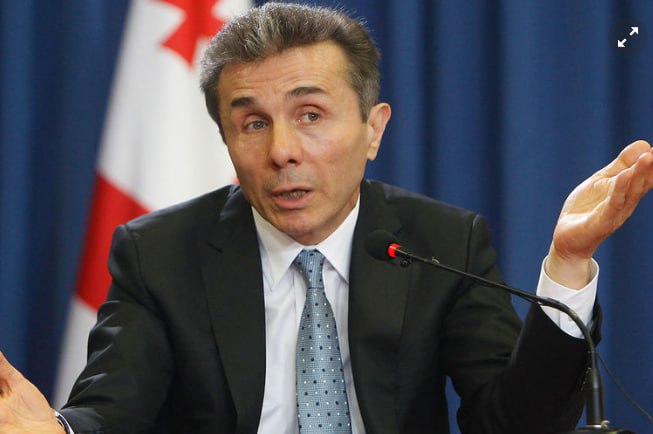
The founder and honorary chairman of the ruling party of Georgia, businessman and oligarch Bidzina Ivanishvili declined a meeting with US Ambassador Robin Dunnigan, who was supposed to deliver a message from the presidential administration. According to the embassy’s statement, this happened last week.
“Bidzina Ivanishvili declined a meeting with Ambassador Dunnigan, where he was supposed to hear a message from the Trump administration. At the request of Secretary of State Rubio, Ambassador Dunnigan requested a meeting with Bidzina Ivanishvili on May 22 to deliver a message from the administration and reiterate specific steps the Georgian government can take to demonstrate the seriousness of its intentions to reset relations with the United States. We hope that the Georgian government sincerely wants to return to the 33-year partnership and friendship with America and the American people,” the department emphasized.
Ivanishvili confirmed his refusal to meet with Dunnigan. According to him, he suggested a meeting with the Prime Minister instead, but the Ambassador was not interested in such an alternative.
"They can say that as the founder and honorary chairman of the ruling party, I have a special influence on decision-making. However, I assure you that not a single fundamental decision in the ruling party is made without the participation of the team, first and foremost, the Prime Minister. The only explanation for the request for a meeting with me personally could only be that such a meeting is valuable for them for personal blackmail," Ivanishvili shared his guesses.
According to the oligarch, the American side can use formal and informal sanctions against him as a subject of blackmail. In his statement, Ivanishvili also supported the government's idea of a complete reset of Georgian-American relations.
The Georgian Dream places responsibility for the crisis in relations with the United States on Deep State. However, it is noteworthy that in this context, the ruling party of Georgia emphasizes a certain confrontation between the White House and the State Department. In particular, Georgian Prime Minister Irakli Kobakhidze noted that US Secretary of State Marco Rubio is under the influence of the "Deep State", since he congratulated not the authorities, but only the people of Georgia on Independence Day. In contrast, Donald Trump sent a personal congratulation addressed to the country's President Mikheil Kavelashvili.
"This duplication from the same government directly reflects the confrontation that is currently taking place between the Trump administration and the Deep State. This already indicates a duel and confrontation that will take place between the new administration and the Deep State. Otherwise, it is impossible to explain how such radically different letters can come to Georgia," Kobakhidze claims.
Earlier, the list of world leaders who, according to the Georgian authorities, are involved in the Deep State included French President Emmanuel Macron, Polish Prime Minister Donald Tusk and German Chancellor Friedrich Merz. This happened immediately after they published a joint critical statement addressed to official Tbilisi. Commenting on this step, Kobakhidze emphasized that these political figures "can no longer make decisions independently." He also noted that the conspiracy theory has an impact on US Ambassador Robin Dunnigan. This is how he explained her absence from the event on the occasion of Georgia's Independence Day, which she initially really wanted to attend.
In early January, the political council of the Georgian Dream published a collective statement that spoke at length about the Deep State conspiracy theory. According to the statement, it is the Deep State that is behind the "global war party." In addition, in January, Levan Machavariani, a member of parliament from the ruling party of Georgia, shared a chain of conclusions about the relationship between the so-called radical opposition of the country and the new US administration. The member of the Georgian Dream called the head of the White House an enemy of the Deep State and, as a result, supporters of the network in the form of radical oppositionists.