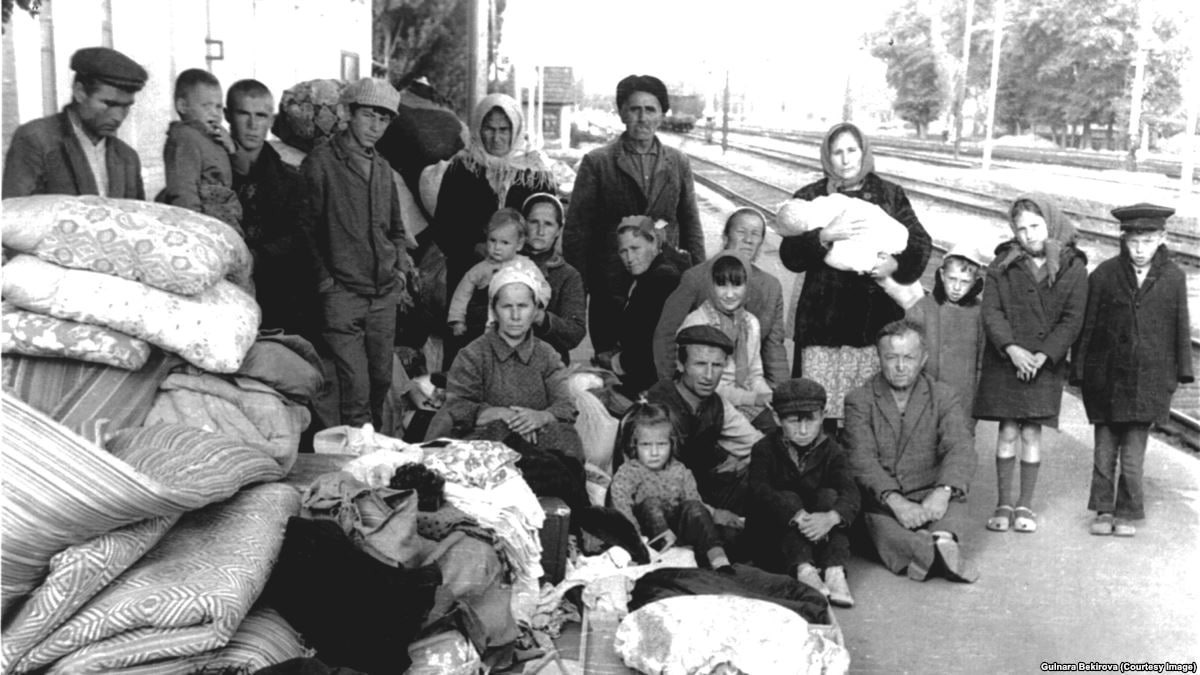
80 years have passed since the start of the deportation of the Crimean Tatars

May 18 has been declared the Day of Remembrance of the Victims of the Crimean Tatar Genocide. On this day in 1944, a criminal operation began in the USSR to forcibly evict the Crimean Tatars from their historical homeland to Central Asia. According to the National Movement of Crimean Tatars, in total about 230 thousand people were deported from Crimea. In the first years of deportation, from 20 to 46% of people died from hunger and disease.

Most of the people were forcibly resettled in Uzbekistan, as well as in adjacent areas of Kazakhstan and Tajikistan. Small groups were sent to the RSFSR: the Mari Autonomous Soviet Socialist Republic, the Southern Urals and the Kostroma region. The deportation claimed the lives of almost half of the Crimean Tatars, and the rehabilitation of the people during the Soviet period never happened.

Informally, the ban on the return of Crimean Tatars was in effect until 1989. Over the next four years, half of all Crimean Tatars who then lived in the USSR returned to Crimea - 250 thousand people.

In 2015, the Verkhovna Rada of Ukraine recognized the deportation of the Crimean Tatar people as genocide.

Последние новости
North Ossetian Police Launch Inquiry Into Threats Against Women Linked to Telegram Channel
Society
North Ossetian Police Launch Inquiry Into Threats Against Women Linked to Telegram Channel
1 August 2026

Police in Russia's North Ossetia have launched an inquiry following a campaign of online harassment targeting women through the Telegram channel Kavkazskaya Obshchina ("Caucasian Community"). The channel's administrators published women's personal information, insulted them and issued threats of violence over behaviour they claimed violated Caucasian traditions. 

Human Rights Advocates Question Investigators' Claims Linking Batalkhadzhins to the Caucasus Emirate
News
Human Rights Advocates Question Investigators' Claims Linking Batalkhadzhins to the Caucasus Emirate
1 August 2026

Russian law enforcement agencies have claimed that members of the Batalkhadzhin Sufi community were linked to the Caucasus Emirate*, a militant Islamist organisation. Human rights advocates, however, have questioned the allegations, noting that the group effectively ceased to exist more than a decade ago and that publicly available case materials contain little evidence of specific acts of support for militants.

Threat of Muslim Alkhazov's Deportation From Germany Raises Fresh Concerns Over the Status of Chechen Asylum Seekers in Europe
Human rights
Threat of Muslim Alkhazov's Deportation From Germany Raises Fresh Concerns Over the Status of Chechen Asylum Seekers in Europe
1 August 2026

Germany's decision to deport Chechen-born Muslim Alkhazov despite claims by his legal team that his family has been persecuted has sparked renewed concern among Chechen human rights advocates and members of the diaspora across Europe. They argue that the case could signal an emerging shift in how European authorities assess asylum claims filed by people from Chechnya.

Drone attack on Volgograd leaves one dead, eight injured
News
Drone attack on Volgograd leaves one dead, eight injured
31 July 2026

The number of people injured in a large-scale Ukrainian drone attack on the southern Russian city of Volgograd has risen to nine after rescuers recovered the body of a woman from the rubble of a residential building struck overnight on July 31.