Crimean Tatar political prisoner transferred to strict conditions again

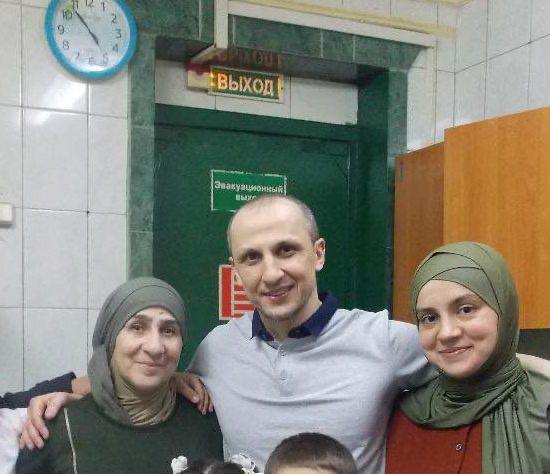
Former coordinator of the Crimean Solidarity movement Server Mustafayev was sent to a cell-type facility for two months. His wife said that this happened after the “Moscow inspection” that took place in the colony in the second half of March.

“One of the employees of this commission showed his negative attitude towards the Crimean Tatars, towards our religion. Server did not say much, but as far as we understood, this employee very indecently, with a biased attitude towards Muslims, with statements that did not correspond to reality, openly showed his hostility towards them. And as a result, my husband was punished,” Maya Mustafayeva shared.

In February, it became known that in IK-1 Tambov, Crimean Tatar human rights activist Server Mustafayev, sentenced to 14 years, had new health problems. During his time in strict conditions, his lower back pain worsened. In addition, the man probably began to develop psoriasis due to stress.

Earlier, Mustafayev reported deteriorating vision and heart problems in prison. He was arrested in 2018. The human rights organization Front Line Defenders filed a complaint with the Prosecutor General's Office of the Russian Federation about the failure to provide the prisoner with medical care, after which he was assigned a full examination.

Server Mustafayev is the coordinator of the public association "Crimean Solidarity", which provides legal, informational and social assistance to the families of political prisoners in Crimea. In 2020, the Southern District Military Court sentenced him to 14 years in prison on charges of participating in the Islamic party "Hizb ut-Tahrir". It is banned in the Russian Federation, but operates freely in Ukraine and other countries of the world and Europe.
Последние новости
Opposition protest, resignation, and Pashinyan’s return: Armenia’s new parliament begins work
Politics
Opposition protest, resignation, and Pashinyan’s return: Armenia’s new parliament begins work
2 August 2026

The inaugural session of the ninth convocation of Armenia’s National Assembly took place in Yerevan. The new parliament began its work with a political protest: during the swearing-in ceremony, opposition representatives refused to stand or recite the oath, whereas deputies from the ruling party stood while doing so. That same day, Nikol Pashinyan’s government resigned, in accordance with the Constitution.

North Ossetian Police Launch Inquiry Into Threats Against Women Linked to Telegram Channel
Society
North Ossetian Police Launch Inquiry Into Threats Against Women Linked to Telegram Channel
1 August 2026

Police in Russia's North Ossetia have launched an inquiry following a campaign of online harassment targeting women through the Telegram channel Kavkazskaya Obshchina ("Caucasian Community"). The channel's administrators published women's personal information, insulted them and issued threats of violence over behaviour they claimed violated Caucasian traditions. 

Human Rights Advocates Question Investigators' Claims Linking Batalkhadzhins to the Caucasus Emirate
News
Human Rights Advocates Question Investigators' Claims Linking Batalkhadzhins to the Caucasus Emirate
1 August 2026

Russian law enforcement agencies have claimed that members of the Batalkhadzhin Sufi community were linked to the Caucasus Emirate*, a militant Islamist organisation. Human rights advocates, however, have questioned the allegations, noting that the group effectively ceased to exist more than a decade ago and that publicly available case materials contain little evidence of specific acts of support for militants.

Threat of Muslim Alkhazov's Deportation From Germany Raises Fresh Concerns Over the Status of Chechen Asylum Seekers in Europe
Human rights
Threat of Muslim Alkhazov's Deportation From Germany Raises Fresh Concerns Over the Status of Chechen Asylum Seekers in Europe
1 August 2026

Germany's decision to deport Chechen-born Muslim Alkhazov despite claims by his legal team that his family has been persecuted has sparked renewed concern among Chechen human rights advocates and members of the diaspora across Europe. They argue that the case could signal an emerging shift in how European authorities assess asylum claims filed by people from Chechnya.