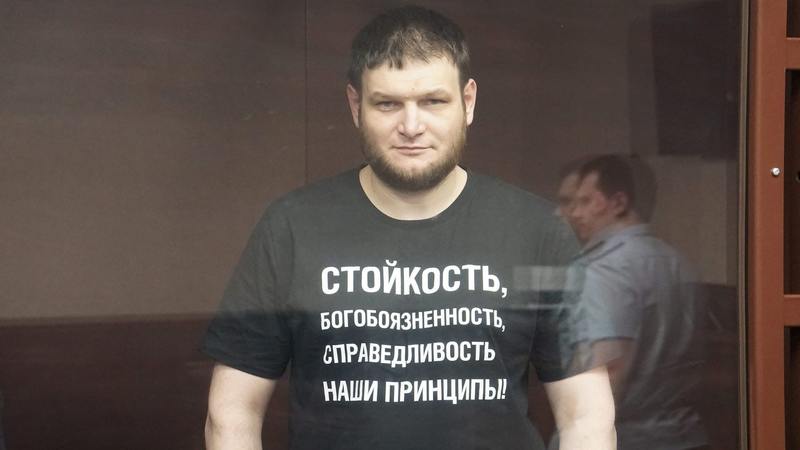
Crimean Tatar political prisoner is forbidden to read namaz

Crimean Tatar civilian journalist Remzi Bekirov is sent to the punishment cell in IK-33 in Abakan (Khakassia) for reading namaz. The administration interprets this as a violation of the internal regulations.

“If earlier he was sent to the punishment cell for reading namaz standing, now he is sent there even if he reads sitting. They do not allow him to read [namaz] at all,” complained the wife of the political prisoner, Khalide Bekirova.

Earlier, a court in Crimea rejected Remzi Bekirov’s claim against the colony administration for placing him in a punishment cell for five days as punishment for performing morning namaz. Over the course of six months, he was placed in the punishment cell seven times for formal reasons: he did not greet an employee, did not put on a hat, prayed at the wrong time.

In March 2022, the Southern District Military Court of Rostov-on-Don sentenced Remzi Bekirov to 19 years in prison. He was found guilty of participating in the Islamic party Hizb ut-Tahrir, which is recognized as a terrorist organization in the Russian Federation.

Since January 2015, in Crimea, which came under Russian control, they began to massively initiate criminal cases for participation in Hizb ut-Tahrir. According to human rights activists, Crimean Tatars are being persecuted not for preparing a coup d'etat and terrorism, but for criticizing the Russian authorities.

Последние новости
Opposition protest, resignation, and Pashinyan’s return: Armenia’s new parliament begins work
Politics
Opposition protest, resignation, and Pashinyan’s return: Armenia’s new parliament begins work
2 August 2026

The inaugural session of the ninth convocation of Armenia’s National Assembly took place in Yerevan. The new parliament began its work with a political protest: during the swearing-in ceremony, opposition representatives refused to stand or recite the oath, whereas deputies from the ruling party stood while doing so. That same day, Nikol Pashinyan’s government resigned, in accordance with the Constitution.

North Ossetian Police Launch Inquiry Into Threats Against Women Linked to Telegram Channel
Society
North Ossetian Police Launch Inquiry Into Threats Against Women Linked to Telegram Channel
1 August 2026

Police in Russia's North Ossetia have launched an inquiry following a campaign of online harassment targeting women through the Telegram channel Kavkazskaya Obshchina ("Caucasian Community"). The channel's administrators published women's personal information, insulted them and issued threats of violence over behaviour they claimed violated Caucasian traditions. 

Human Rights Advocates Question Investigators' Claims Linking Batalkhadzhins to the Caucasus Emirate
News
Human Rights Advocates Question Investigators' Claims Linking Batalkhadzhins to the Caucasus Emirate
1 August 2026

Russian law enforcement agencies have claimed that members of the Batalkhadzhin Sufi community were linked to the Caucasus Emirate*, a militant Islamist organisation. Human rights advocates, however, have questioned the allegations, noting that the group effectively ceased to exist more than a decade ago and that publicly available case materials contain little evidence of specific acts of support for militants.

Threat of Muslim Alkhazov's Deportation From Germany Raises Fresh Concerns Over the Status of Chechen Asylum Seekers in Europe
Human rights
Threat of Muslim Alkhazov's Deportation From Germany Raises Fresh Concerns Over the Status of Chechen Asylum Seekers in Europe
1 August 2026

Germany's decision to deport Chechen-born Muslim Alkhazov despite claims by his legal team that his family has been persecuted has sparked renewed concern among Chechen human rights advocates and members of the diaspora across Europe. They argue that the case could signal an emerging shift in how European authorities assess asylum claims filed by people from Chechnya.