Massacre in the village Karpinsky mound, "cleansing" of Alkhan-Kala: facts and victims of operations
June 19, 2001
***
On the night of June 19, in the village of Karpinsky Kurgan, the Zavodsky district of Grozny, the Russian military staged a pogrom, beaten and captured local residents.
According to eyewitnesses of the events, the military smashed the gates with armored personnel carriers and, breaking into the yard, broke the doors and windows of the houses, and having entered the premises, they imitated searches, destroying furniture, taking away the things and products they liked. After the robberies, arrests began.
According to various sources, from 30 to 40 people were captured. In the morning, demanding their release, the inhabitants of the village of Karpinsky Kurgan gathered near the building of the administration of the Chechen Republic, but no one came out to them.
***
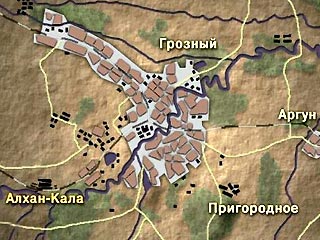
At dawn in the village of Alkhan-Kala, Grozny region, the Russian command began a “cleansing operation”. Two days before that, the settlement was cordoned off from all sides by military units and armored vehicles. The entry and exit of civilians was stopped. And in the early morning of June 18, there was a massive shelling of the outskirts and residential areas of Alkhan-Kala. Helicopters landed from helicopters in the area of the Sunzha Ridge and on some streets of the settlement.
On Nuradilov Street, the landing took place at about 8.30, at the same time, the Ural with the military also drove up there. While beating, they dragged Beslan Baimaskhanov out of the nearest house and put him in a truck. Among those who detained him was a man in a mask, who pointed out to the military where checks should be carried out especially carefully. Most likely it was an informant from among the local residents.
In the morning, 16-year-old Valid Lemaevich Bersanov was taken from his parents' house, and in the afternoon the military returned and detained his older brother, 19-year-old Lom-Ali Lemaevich Bersanov.
Musa Salmanovich Amirov, born in 1978, a student of the Chechen State University, and 20-year-old Alman Tutuevich Bazaev were taken away from the same Nuradilov street. Ruslan Magomedovich Dovletukaev was detained on Lenin Street, and Khasan Mekhtiyev, 17 years old, on Novaya Street.
On this day, the military captured 157 people in Alkhan-Kala, and during the entire operation - at least 700. All of them were kept in the commandant's office of the village, where a temporary filter station was equipped. Hanging on the horizontal bar and beating people, they tried to find out where Arbi Baraev and members of his group were. By the evening, the detainees were released, with the exception of Musa Amirov, Alman Bazaev, Ruslan Dovletukaev, Khasan Mekhtiev and Umar Isakov (the latter, during the arrest, the military planted a horn with machine gun cartridges).
The returnees said that they were severely beaten, tortured with electric shocks, there were cases when they were poured with boiling water. As a result of the beatings, freestyle wrestling coach Adam Chagaev and a student of the medical institute Shugaipov were hospitalized. They were given to relatives for ransom on June 29.
The "cleansing" of Alkhan-Kala continued until June 25 inclusive. However, even after the formal completion of the operation, the military broke into houses at night, continued to capture and rob people. Some of the local residents were taken to the commandant's office several times. Many, after interrogation, checking documents and beatings, were allowed to go home in the evening. But on June 26, it was known about the forced removal and subsequent disappearance of 26 people. No one told the relatives where they were and what charges were brought against them.
At first, the Labazanov sisters, aged 19 and 21, who worked in a cafe where, according to the Russian military, members of Arbi Barayev's group liked to relax, were also considered missing. Soon, however, both were released.
On the very first day of the operation, villagers gathered near the commandant’s office, but the fact that the “disappeared” were there was officially recognized by the military only on June 25. After lengthy negotiations, they agreed to release the detainees and demanded that they hand over a machine gun for each or pay money equal to its value, i.e. 2500 rubles.
Some time later, an officer who did not introduce himself came out to the Alkhan-Kalins, who were waiting for the release of their relatives, and said that everyone had been transferred to Khankala. After the crowd had dispersed, residents of the houses adjacent to the commandant's office heard people screaming from its territory and saw how they were being loaded into a helicopter that flew off towards Grozny.
In Alkhan-Kala, according to eyewitnesses, eight people, including Arbi Baraev, were killed after armed resistance to Russian units. On the part of the military, according to the same information, 24 were killed and dozens were wounded.
The villagers saw how the military trucks brought the corpses of the dead members of the Chechen armed formations and put them on public display, shouting: "Look at your freaks." They threw smoke bombs at the assembled people.
On June 21, the bodies of eight Chechens who resisted, with the help of elderly people, were buried by the military in a common pit in the village cemetery. On June 22, three more corpses were brought there and buried, but these people, most likely, were not militants.
In late June and early July, 12 more corpses were found in the vicinity of the village. These were the people mentioned by the locals as among the 26 people who “disappeared” after being detained by the Russian military. The blown up corpses of Alman Bazaev, Musa Amirov, Ruslan Dovletukaev, Umar Isakov and Khasan Mekhtiev, for example, were found at the field camp of the local state farm in a water distribution hatch. The bodies of Daud Amatovich Vitaev, born in 1966, and his neighbor Rustam Sultanovich Razhapov, born in 1974, who were killed by the Russian military on June 21 in the Vitaevs' house, were found six days later in a lightly covered pit in the local cemetery, in the same place where they were the bodies of the militants.
During the “cleansing” operation, six more people were shot or tortured to death in their yards. One of them, Khavazhi Khambulatov, had his throat cut with a knife, his eyes gouged out and his nose cut off. In addition, it is known about the extrajudicial execution of 26-year-old Vladimir Sosedov and two residents of the village of Alkhan-Yurt - Kantaev and Tsakaev, who were visiting relatives at the time the "cleansing" began.
During the "mopping up" rocket and artillery strikes were carried out. Civilians were denied a corridor to leave the settlement. Moreover, people who had accumulated at checkpoints were fired upon, as a result of which, according to some reports, a man and a woman were killed.
The military deliberately and purposefully subjected the inhabitants of Alkhan-Kala to violence and abuse. On June 21, for example, in the afternoon they wounded 6-year-old Ramzan Abdurakhmanov in the thigh. The child's mother, Zaina Abdurakhmanova, made a lot of efforts to take him to the hospital from the completely besieged village. It only worked out on the third day. Moreover, she paid more than 2,000 rubles for a pass at checkpoints.
Every house in the village was robbed: gold jewelry, carpets, audio and video equipment were taken. The military slaughtered cows, sheep, geese, chickens. They set fire to the houses. So, on the streets of Kirov and Partizanskaya they burned more than a dozen households.
The operation was led by a general who introduced himself as "Typhoons". He told the villagers who had gathered in front of the commandant's office that he would force each of them to "burp Baraev." Who this man really was, what structures he represented, remained unknown.
***
The prosecutor's office of the Shelkovsky district opened a criminal case No. 33035 (Article 126 part 2 of the Criminal Code of the Russian Federation) on the fact of the abduction of Khasanbek Salamovich Nesersultanov, born in 1961, who lived in Art. Grebenskaya at the address: Druzhby st., 49. Armed men, presumably Russian soldiers, took him away from home on September 4, 2000. Two months after the initiation on the basis of Art. 195 p. 3 of the Code of Criminal Procedure of the RSFSR, the criminal case was suspended. At the beginning of 2004, the further fate of Khasanbek Nesersultanov was not established.
***
In the Nozhai-Yurt district, as a result of an explosion on an explosive device, local residents T. and Y. Arsanukaevs were killed. Memorial Human Rights Center does not have more detailed information about the circumstances of the incident.
***
The first meeting of the All-Russian Democratic Conference took place in Moscow. Among many other issues, it discussed the situation in the North Caucasus, in particular the situation of forced migrants from the Chechen Republic. Representatives of the parties, movements and public organizations that are participants in the meeting, recognizing that the authorities are exerting strong pressure on the refugees in order to force them to return to their place of permanent residence on the territory of the belligerent republic, adopted the following statement:
“The All-Russian Democratic Conference unanimously expresses its extreme concern about the situation of the inhabitants of the Chechen Republic, who were forced to leave its territory. The All-Russian Democratic Conference considers the forced return of refugees to the Chechen Republic categorically impossible, since at present living there cannot be considered safe anywhere, and calls for an end to putting pressure on them for this purpose. The obvious duty of the government is to provide the refugee camps with everything necessary for the people to live. The state should also take upon itself the provision of all the necessary targeted assistance, which would allow citizens who left the Chechen Republic to independently resolve the issue of safe settlement on the territory of our country.
Media reports:
Since the beginning of this year, 230 acts of sabotage and terrorist attacks have been committed in Chechnya with the use of explosives, of which 136 are terrorist attacks. This was announced by the Deputy Head of the Main Directorate of Criminal Investigation (GUUR) of the Ministry of Internal Affairs of the Russian Federation, Major General Viktor Gosudarev. “Explosions are most often aimed at the physical elimination of police officers, military personnel and representatives of local administrations, at intimidating the local population,” said V. Gosudarev at a press conference in Moscow.
***
At about 3 pm in Gudermes, a car parked near the building of the Supreme Court of the republic was blown up. None of the employees of the court was injured, but the building suffered serious damage. Following the first, two more explosions thundered in the immediate vicinity of the temporary and permanent department of the internal affairs of Gudermes, and in both cases Zhiguli vehicles were blown up. According to Malika Gezimiyeva, head of the administration of the Gudermes district, one car exploded near the barrier of the permanent department of internal affairs. The head of administration does not have exact data on the victims, but she claims that "there are a lot of victims, there are also dead." According to Chechnya's prosecutor Viktor Dakhnov, three people were killed (a policeman and two civilians). Eighteen people have been hospitalized. A total of 37 people were injured.
From the book "People Live Here", Usam Baisaev, Dmitry Grushkin, 2006