Today marks the 82nd anniversary of Stalin's deportation of the Karachay people
The forced expulsion of the Karachay people from their native lands, which began on November 2, 1943, was a continuation of the total deportation of certain peoples of the North Caucasus, the Volga region, and the Crimean Tatars. Over three days, from November 2 to 5, by order of the Soviet authorities, approximately 69,000 people, including women, children, and the elderly, were forcibly deported to Kazakhstan and Central Asia, where they would spend 14 long years.
Despite the fact that thousands of Karachays fought on the fronts of the Great Patriotic War, the people were accused by the Soviet authorities of treason and collaboration with the Nazi occupiers. The publication "Voice of Islam" notes that even Karachays decorated for bravery were deported from the Soviet armed forces. According to a source, the authorities offered a 10,000 ruble reward to anyone who turned over Karachays hiding in their homeland to the NKVD.
"Many soldiers were billeted with Karachay families, mostly in rural areas. Several soldiers in each house. The Karachays didn't know these soldiers were NKVD soldiers; they thought they were ordinary Soviet soldiers. Relations between the locals and the soldiers were good. In this way, the NKVD managed to catch the population by surprise. In the middle of the night, the Karachays were ordered to quickly leave their homes. In some places, they were told immediately, while in others, they were given 20 minutes to pack. Since those carrying out the operation wanted to appropriate the personal belongings of the deportees, the Karachays were not allowed to take more than they could carry: a small suitcase or a bundle of belongings and some food," the publication quotes eyewitnesses as saying.
According to official figures, approximately 43,000 people died from hunger and deprivation in the deportation areas.
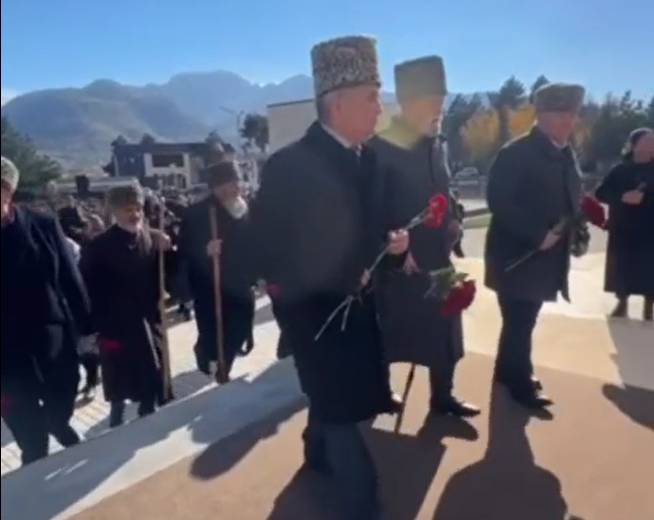
Mourning events are taking place in Karachevo-Cherkessia today to mark this tragic date. Head of the republic, Rashid Temrezov, addressed the region's residents on this day.
"This is one of the most tragic dates in the history of our republic. But at the same time, it is a reminder of the strength of spirit and resilience of the Karachay people, who were not broken by hardship and injustice," the head of the Karachay-Cherkessia stated.
He recalled that "there is not a single Karachay family untouched by those tragic events."
"On this day 82 years ago, tens of thousands of innocent people were suddenly deprived of the right to live and raise their children on their native land." "While the elderly, women, and children were deported to Kazakhstan and Central Asia, their sons, brothers, and fathers continued to fight heroically on the fronts of the Great Patriotic War, proving their loyalty and love for their homeland at the cost of their own lives," Temrezov emphasized.
In Karachayevsk, representatives of the city administration, public figures, and residents gathered at a memorial event organized by local authorities. Eyewitnesses who survived the deportation shared their memories, while representatives of other ethnic groups expressed sympathy and solidarity. Those gathered honored the memory of the victims of those years by laying flowers at the memorial. At noon, the Kuliev Cultural Development Center hosted the premiere of the play "The Pain of My People," staged by the Tyubeshiu People's Theater.