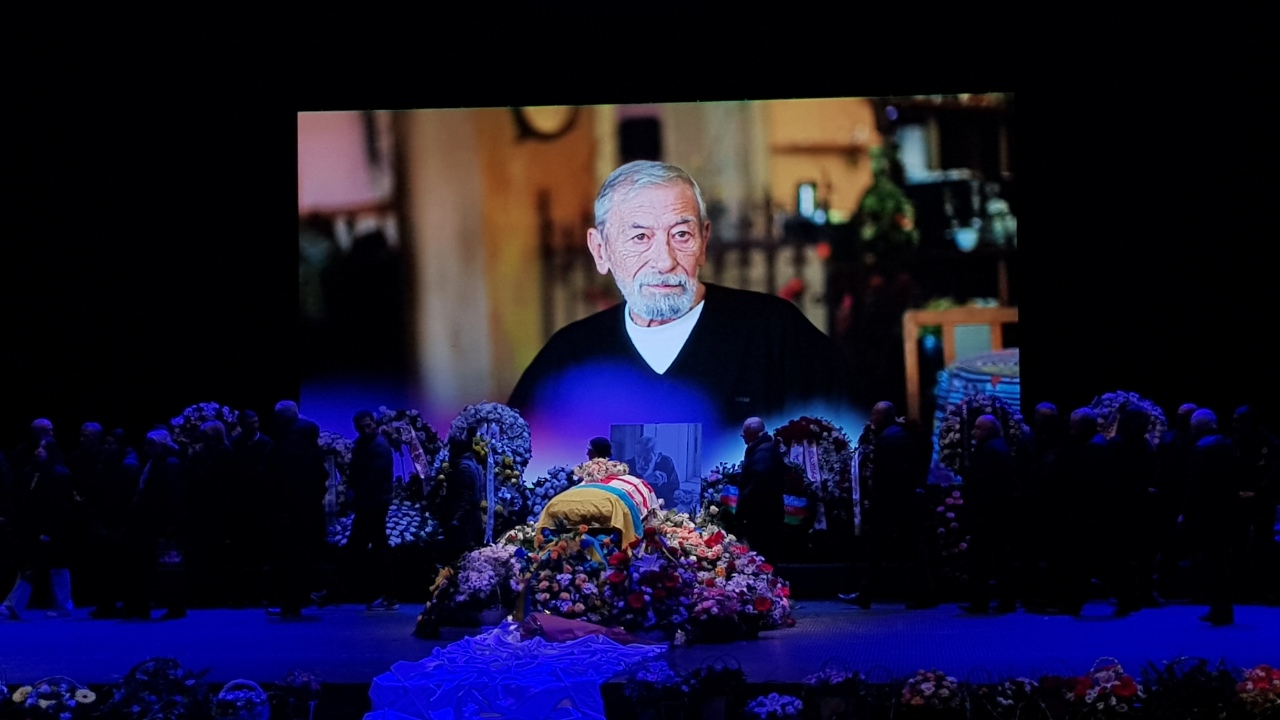
On January 15, Vakhtang Kikabidze (Buba), an actor, singer, director and public figure, died. He died in Georgia after an illness at the age of 84 and was buried next to his wife and mother in the Berean cemetery.
Vakhtang Kikabidze was born in Tbilisi in 1938. He studied at Tbilisi State University, at the Institute of Foreign Languages. He worked in the Tbilisi Philharmonic and was a soloist in the Orera ensemble. In the 1960s he began acting in films. In total, he participated in more than 20 films. The paintings “Don’t Cry!” brought him the greatest fame. (award for best actor at the Cartagena International Film Festival, 1970), “Completely Lost” and “Mimino” by Georgy Danelia. In 1980 he received the title of People's Artist of Georgia.
Since the 1980s he began his solo career as a singer. Popular songs performed by him were “My years are my wealth”, “Chito-Drito” and others.
The renowned artist actively expressed his civic position on many current political issues and participated in public life.
In August 2008, due to the invasion of Georgia by Russian troops, Kikabidze renounced the Russian Order of Friendship, canceled his anniversary concerts in Moscow, called Russia an aggressor country, an occupier country, and never came to Russia on tour again.
In 2009, the artist wrote a song and released a video clip for it with footage chronicling the August War. Against the backdrop of Russian planes bombing Georgian houses, against the backdrop of the wounded loading their property into cars or calling for help near destroyed houses, Kikabidze sang, addressing the Russian intelligentsia who did not support Georgia:
“You didn’t know,
You hardly knew.
You didn't betray me -
disappointed."
This is by no means said for the sake of rhyme: Kikabidze precisely emphasized that the Russian intelligentsia, from his point of view, “is not to blame, no one says anything about it. But they are disappointed, yes, because they do not exercise their right to tell the truth. That's all we're talking about - the fact that they remained silent... And so - everything in the song: “We live, as before, in anticipation of a meeting. There is a place for hope, but the world is not eternal.”
The artist’s fears turned out to be prophetic, but his hopes were in vain, and he himself foresaw this. The meetings were not destined to happen, the hope was not destined to come true, and the world, already fragile, was completely under global threat. Subsequent events widened the gap between many people almost to the abyss - the annexation of Crimea in 2014, the war of the Russian Federation against Ukraine in 2022... In his declining years, Kikabidze had to live to see these atrocities, he condemned them bluntly, and called Vladimir Putin “a black politician forces" and "invader".
Discussing the fate of the Caucasus and the future of its peoples, in an interview with Chechen journalist Aslanbek Dadaev in 2017, Vakhtang Kikabidze said that he considered the ideal solution to be the unification of the Caucasian peoples into a single state.
He supported Mikheil Saakashvili. In the 2020 parliamentary elections, Kikabidze headed the list of the “United National Movement” of the ex-president of Georgia and, following the election results, became a member of parliament.
In December 2022, he visited the arrested Saakashvili in a military hospital in Gori and later said that the prisoner was not feeling well, but he was not broken.
The artist called Ukrainian President Zelensky and said: “He is your citizen, you must take him away, otherwise he will be killed.”
He is no longer with us. He will not know whether this prophecy will come true. And we will find out. He, a bright, joyful talent, but a perspicacious man who had seen a lot, hoped that this would not happen.