Azerbaijan Demands Lengthy Sentences for Former Nagorno-Karabakh Leaders
At a Baku military court hearing, the prosecutor's office presented the requested sentences for 15 former Nagorno-Karabakh leaders accused of war crimes.
The prosecution requested life sentences for the following individuals: Arayik Harutyunyan (former president of the unrecognized republic of Nagorno-Karabakh), David Ishkhanyan (speaker of parliament), David Babayan (foreign minister), Levon Mnatsakanyan (commander of the Karabakh army), and David Manukyan (deputy commander of the army).
For former Nagorno-Karabakh presidents Arkady Ghukasyan and Bako Sahakyan, the prosecutor's office requested 20-year prison terms, with the first 10 years to be served in prison and the remainder of the sentence to be served in a high-security penal colony. A similar 20-year sentence has been requested for Melikset Pashayan, a veteran of two Karabakh wars.
Fifteen former Karabakh officials are on trial, including former presidents Arayik Harutyunyan, Bako Sahakyan, and Arkady Ghukasyan, as well as former parliament speaker David Ishkhanyan and Nagorno-Karabakh State Minister and former Russian citizen Ruben Vardanyan (his case is being heard separately). They are charged under more than 20 articles of the Criminal Code.
Earlier, former Nagorno-Karabakh Foreign Minister Karen Mirzoyan stated that "the show trial of Karabakh leaders is an act of psychological sabotage." He added that "Baku is trying to exert psychological pressure on the Armenian people. Being essentially Soviet people, they are drawing certain 'parallels' with the events that followed the defeat of Nazi Germany. "This kind of 'Nuremberg Trials' will allow for the formation of a 'new Armenia' that will cease to be an obstacle to the realization of the ideological foundations of Azerbaijani and Turkish statehood," the former minister mused.
In June, Armenian Foreign Minister Ararat Mirzoyan stated that there was no constructive dialogue with Azerbaijan regarding the Armenian prisoners illegally held in Baku.
"The issue of prisoners of war and illegally detained persons is an important part of the broader agenda, a sensitive issue, perhaps one of the few issues on which constructive dialogue is impossible," he noted.
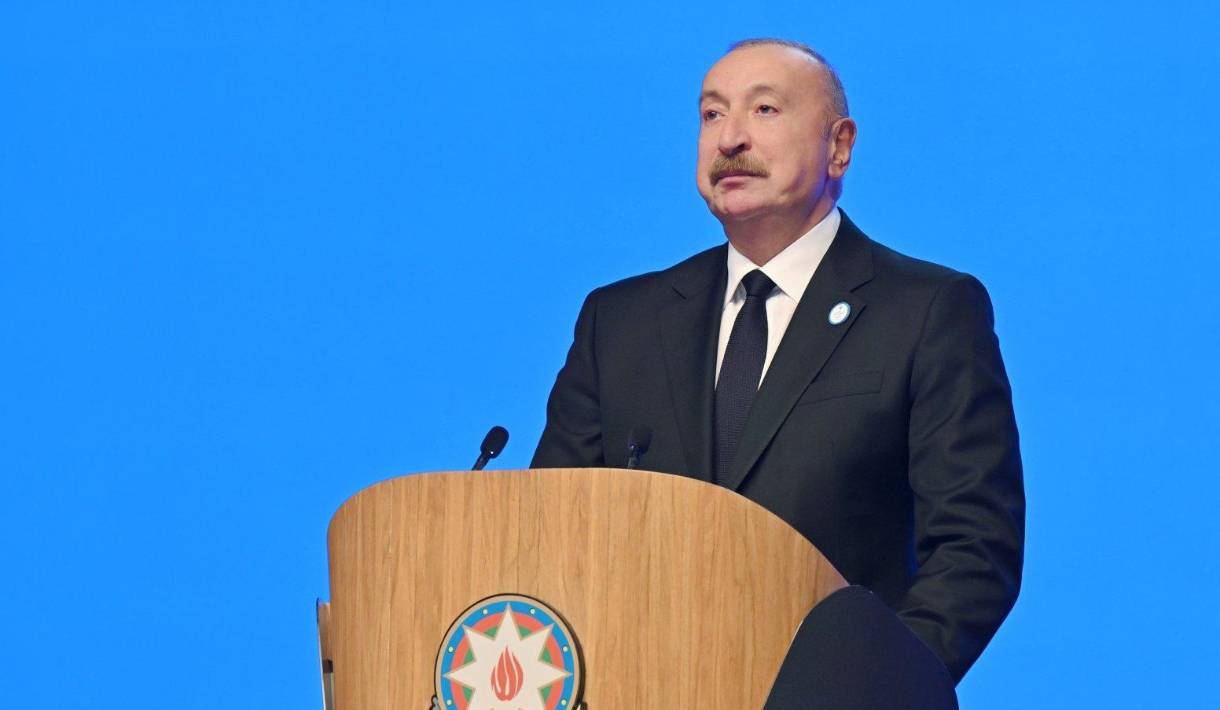
Baku's position was clearly expressed in a statement made by Azerbaijani President Ilham Aliyev at a meeting with Turkish Defense Minister Hulusi Akar in Baku in late 2020. He emphasized that many Armenian servicemen were "arrested" and "cannot be considered prisoners of war."
"The Armenian armed forces that remain in the liberated lands do not obey the political leadership of Armenia." Since the end of the war, many of them have been arrested. But they cannot be considered prisoners of war; they are terrorists,” said Ilham Aliyev.
Some analysts note that holding prisoners could be a tool for pressure or strengthening the domestic political position of the Azerbaijani authorities.
In particular, an article in Armenpress (2023) cites the opinion of Taron Simonyan, an expert on international law and conflicts and a lecturer at Yerevan State University. He believes that Azerbaijan is deliberately removing the issue of prisoners from the legal framework, replacing legal mechanisms with “internal” ones—that is, show trials that serve as a political tool both domestically and internationally.
“Baku is seeking to minimize the legal component of the issue by any means possible in order to weaken Armenia’s position. One of these strategies is internal, implying that the trials serve the interests of Azerbaijan’s ruling elite and thereby strengthen its position,” the expert asserts.