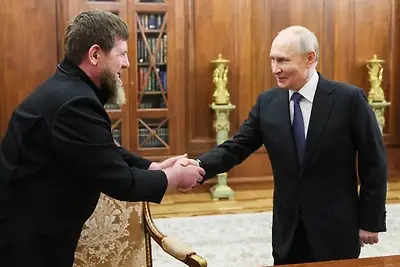
On July 3, the head of Chechnya, Ramzan Kadyrov, signed a decree banning the use of civilian drones in the republic’s airspace. Chechnya has become the 59th Russian region to introduce a ban on civilian drones.
“Temporarily ban the use of unmanned civil aircraft in the airspace over the territory of the Chechen Republic, with the exception of unmanned civil aircraft used by government bodies of the Chechen Republic and institutions subordinate to them, federal government bodies, local government bodies in the Chechen Republic, organizations performing state defense order, as well as other organizations under an agreement with government authorities,” the decree says.
The ban is explained by measures to strengthen the protection of public order and ensure public safety. Control over the implementation of the ban is entrusted to regional military and security forces: the Ministry of Internal Affairs, the FSB, the Russian Guard, the FSIN, the FSO.
The duration of the ban is not specified, meanwhile, in 2025, they are planning to hold an international “Drone Race” in Grozny, and in the longer term, to create an innovative scientific and technological center for UAVs.
Drone flights over Russia began to be banned after the military invasion of Ukraine began. In December 2022, such a ban was introduced in North Ossetia, in March 2023 – in the Stavropol Territory.
On May 3, immediately after the attack on the Kremlin by two unidentified drones, the launch of drones was banned in Moscow. “The decision was made to prevent the unauthorized use of UAVs, which could hamper the work of law enforcement agencies,” explained Sergei Sobyanin.
In May, reports of attacks carried out by combat drones on Russian targets began to arrive more and more often. In the Krasnodar Territory, a tank with petroleum products at the Tamanneftegaz base caught fire as a result of a drone crash. Then a fire broke out at the Novoshakhtinsky oil products plant in the Rostov region. The Ilsky oil refinery in the Krasnodar region was attacked by a UAV and burned twice - on May 4 and 5. The most massive attack was on May 30 in the southwest of Moscow. Some of the drones were shot down during approach, but three of the drones caused damage to residential buildings.
On July 30 at night, unmanned aerial vehicles attacked the Moscow City business district of the capital. A security guard was injured, glass in office buildings was broken, and premises were damaged.
On the night of August 4, two unmanned boats attacked the port of Novorossiysk. The Russian Ministry of Defense claims that the attack was organized by the Ukrainian Armed Forces. There was no comment on the attack; earlier Ukrainian President Vladimir Zelensky denied the involvement of the Ukrainian Armed Forces in attacks on Russian territory: “We are fighting on our own land and defending our villages and cities. Even for this we do not have enough weapons. That’s why we don’t use it anywhere else.”
After the attack on Novorossiysk, the head of Sochi, Alexei Kopaygorodsky, announced strengthening the protection of the water area and coastal infrastructure of the city: the authorities promised to protect the piers, beaches and seaport and take “all measures for the safety of 200 thousand tourists.”
On August 6, due to an attempt by a drone to break into Moscow, more than 20 flights were delayed at Vnukovo airport, and arriving planes were redirected to other Moscow airports. The airspace was closed in accordance with the Carpet plan, and the drone was shot down by air defense.