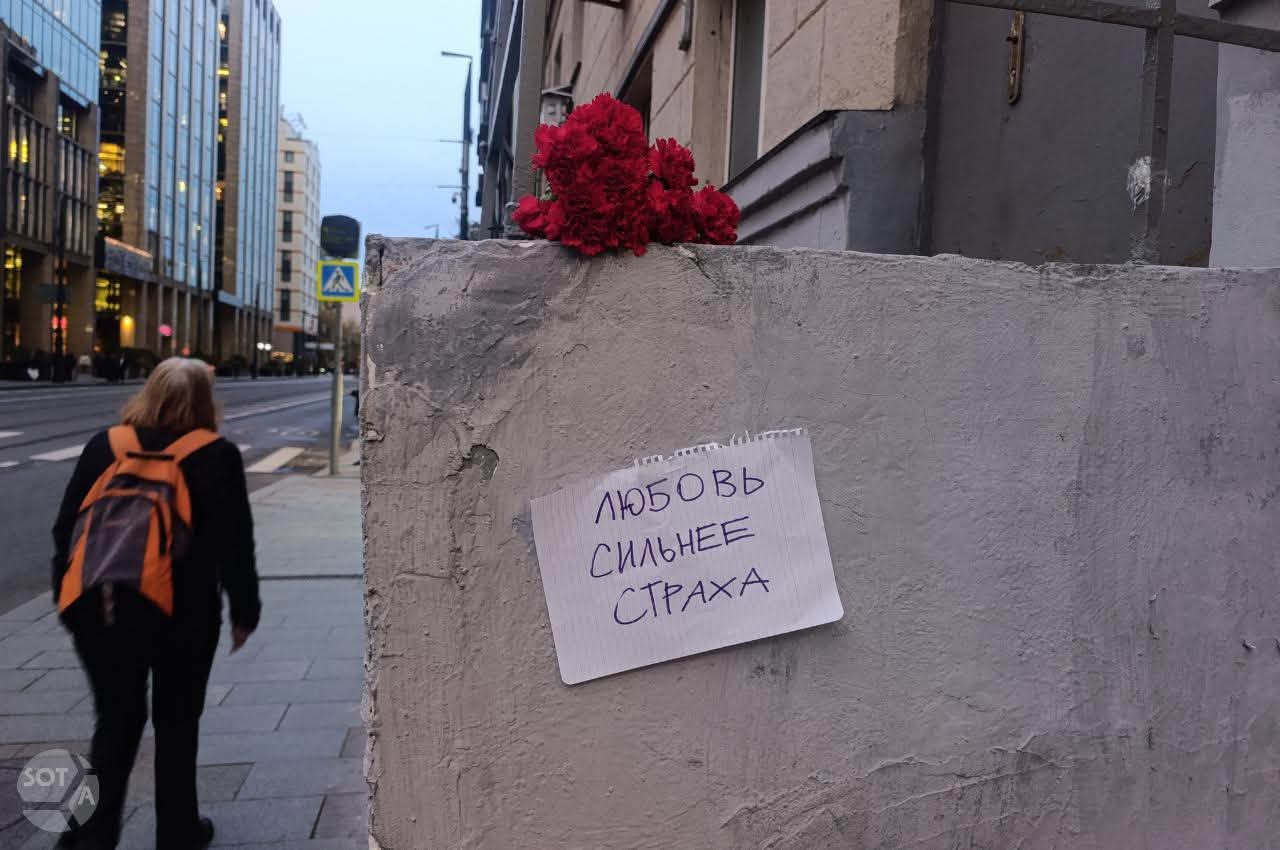
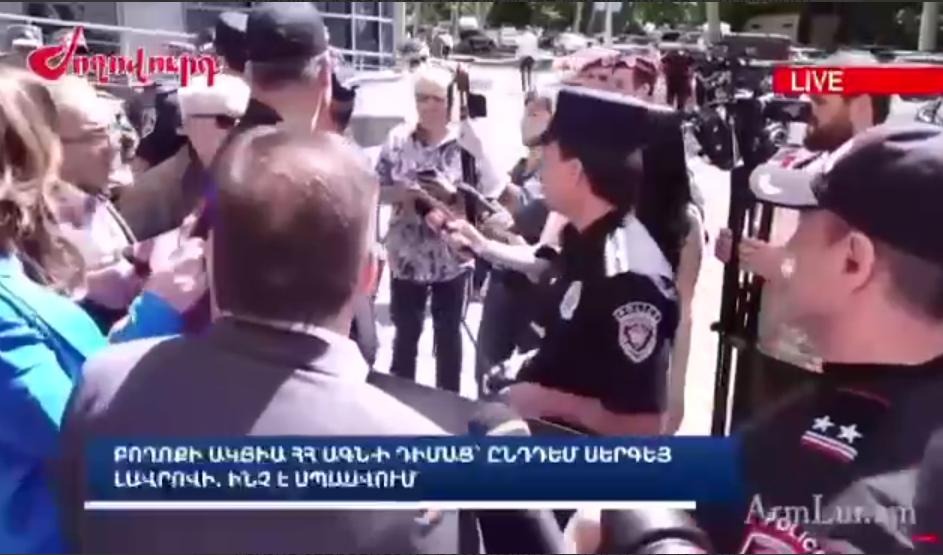
Protest against visit of Russian Foreign Minister held in Yerevan

Today, May 21, an anti-Russian rally was held in the capital of Armenia in connection with the visit of Russian Foreign Minister Sergey Lavrov. It is reported that the protest was organized by representatives of the "For the Republic" party. Demonstrators gathered with posters near the building of the Ministry of Foreign Affairs, where Lavrov met with Armenian diplomat Ararat Mirzoyan.

Speaking at a briefing, Lavrov said that he sees no reason for the "Ukrainization" of Armenia, since the republic is an ally of Russia. He also answered a question about Moscow's arms supplies to Azerbaijan.

"Armenia has used Russian weapons all the years since gaining independence, including to seize seven regions that it did not claim. Not a single leader of Armenia has proposed recognizing Nagorno-Karabakh as an independent entity," the Russian Foreign Minister said.

According to him, the CSTO responded appropriately to the military conflict on the Armenian-Azerbaijani border in September 2022. Lavrov recalled that immediately after these events, the organization's advance mission, headed by the Secretary General, went to the scene, then proposed sending an observer mission to stabilize the situation.

Recall that in 2024, Armenian Prime Minister Nikol Pashinyan announced the freezing of Armenia's participation in the CSTO. Later, the Foreign Ministry reported that the country would not participate in financing the bloc. Yerevan also stopped purchasing weapons from Russia in 2021.

The Collective Security Treaty Organization (CSTO) is a regional international organization created to "protect the independence, sovereignty and territorial integrity" of its member states. The bloc includes the Russian Federation, Armenia, Belarus, Kazakhstan, Tajikistan and Kyrgyzstan. Since last year, Armenia has not actually participated in the activities of the CSTO.
Последние новости
Georgia again rejected calls to join anti-Russian sanctions
Politics
Georgia again rejected calls to join anti-Russian sanctions
25 February 2026

Georgian Prime Minister Irakli Kobakhidze criticized Brussels' demands to join sanctions against Russia. He said these calls were inappropriate, given that the EU itself is a major importer of Russian products.

Ruben Vardanyan Drops Appeal Against 20-Year Sentence in Azerbaijan
Human rights
Ruben Vardanyan Drops Appeal Against 20-Year Sentence in Azerbaijan
25 February 2026

Billionaire and former Nagorno-Karabakh state minister Ruben Vardanyan, sentenced in Baku to 20 years in prison, rejected the legal force of the ruling and dropped his appeal. His family explained that this decision stemmed from the fact that, in their view, the trial was a "staged performance" rather than a proper trial: the hearings were held behind closed doors, without access to independent observers, and the prosecution's motions were ignored. The full text of the verdict was also not released.

Azerbaijani political prisoners appeal to the European Commission to address human rights in the country
Human rights
Azerbaijani political prisoners appeal to the European Commission to address human rights in the country
25 February 2026

A group of imprisoned activists and journalists from Baku's Penal Colony No. 2 has appealed to the President of the European Commission. They demand the implementation of European Parliament resolutions calling for the release of Azerbaijani political prisoners.

Chechnya Leads in Lowest Alcohol Sales
Economy
Chechnya Leads in Lowest Alcohol Sales
25 February 2026

In 2025, residents of the North Caucasus regions consumed the least amount of hard liquor in Russia. The lowest official retail sales figures were recorded in Chechnya (0.01 liters per capita). Other republics of the North Caucasus Federal District also demonstrated modest figures: Ingushetia - 0.7 liters, Dagestan - 2.2 liters, Kabardino-Balkaria - 2.6 liters, North Ossetia - 3 liters, and Karachay-Cherkessia - 3.4 liters. Experts attribute this decline to the prevalence of cultural and religious restrictions, as well as a preference for low-alcohol beverages.