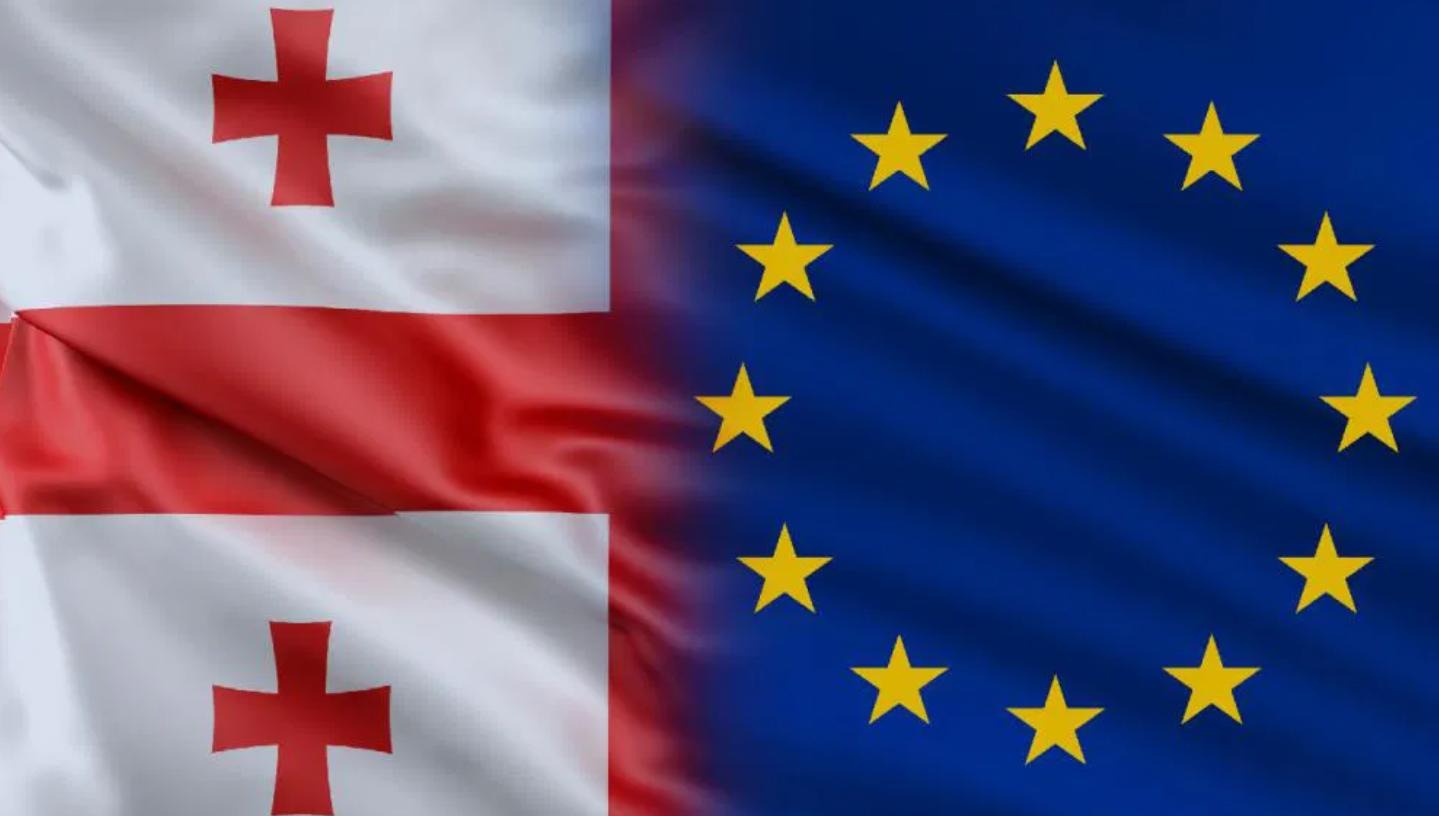
The EU harshly criticized the repressive innovations in Georgian legislation
Brussels criticized the repressive laws and amendments recently adopted by the Georgian parliament, which was effectively formed by the ruling party. This primarily concerns the so-called "direct copy" of the American FARA, which replaced the "Russian" version of the law "On Transparency of Foreign Influence", as well as amendments to the law "On Broadcasting".
In a joint statement, the EU High Representative for Foreign Affairs and Policy Kaja Kallas and European Commissioner Marta Kos noted that these innovations "give the authorities additional tools to suppress dissent and tighten the policy of repression", "threaten the existence of civil society and independent media" and "undermine the foundations of democracy in Georgia".
"Such actions are incompatible with the EU's values of democracy, the rule of law and media pluralism, and fall short of the standards we expect from a candidate country," the statement emphasizes.
The OSCE Office for Democratic Institutions and Human Rights (ODIHR) also responded to the adoption of the American Foreign Agents Registration Act (FARA) in Georgia. The organization believes that this decision threatens civil society, limits fundamental rights and freedoms, and requires revision.
The Office recalls that in the United States, the purpose of FARA is to ensure the registration of private companies and non-profit organizations that lobby in the interests of foreign states. The ODIHR statement says that "the transfer of legislative norms from one country to another requires a balanced approach and consideration of the national legal context." The Office emphasizes that the regulation of lobbying activities should not violate political rights and limit the participation of civil society in the governance of the country.
Let us recall that on April 1, the Georgian parliament approved in the third and final reading a law,
which the ruling party calls an exact analogue of the American FARA (Foreign Agents Registration Act). Failure to comply with the requirements established by the new law, including the obligation to register as an agent of a foreign principal, will entail criminal liability. The law will enter into force 60 days after it is signed by the president appointed by the ruling party, Mikheil Kavelashvili.
In addition, on the same day, legislative amendments were introduced that provide for new restrictions in the media sphere. In particular, the first package of amendments to the Law on Broadcasting prohibits direct and indirect foreign financing for television and radio channels, and this applies even to social advertising. The second part of the amendments defines standards for content on air, as well as on the websites of television and radio companies and their pages on social networks. Earlier, the ruling party announced plans to develop a similar bill for online media.
Yesterday, April 2, the Georgian Parliament adopted in the final reading a bill that provides for amendments to 14 existing laws. According to the amendments, the non-governmental sector of Georgia is now prohibited from participating in government decision-making, including nominating candidates for membership in the Council of Prosecutors and the Disciplinary Board of Judges of General Jurisdiction. It is noteworthy that previously, the participation of NGOs in the process of public administration was mandatory.