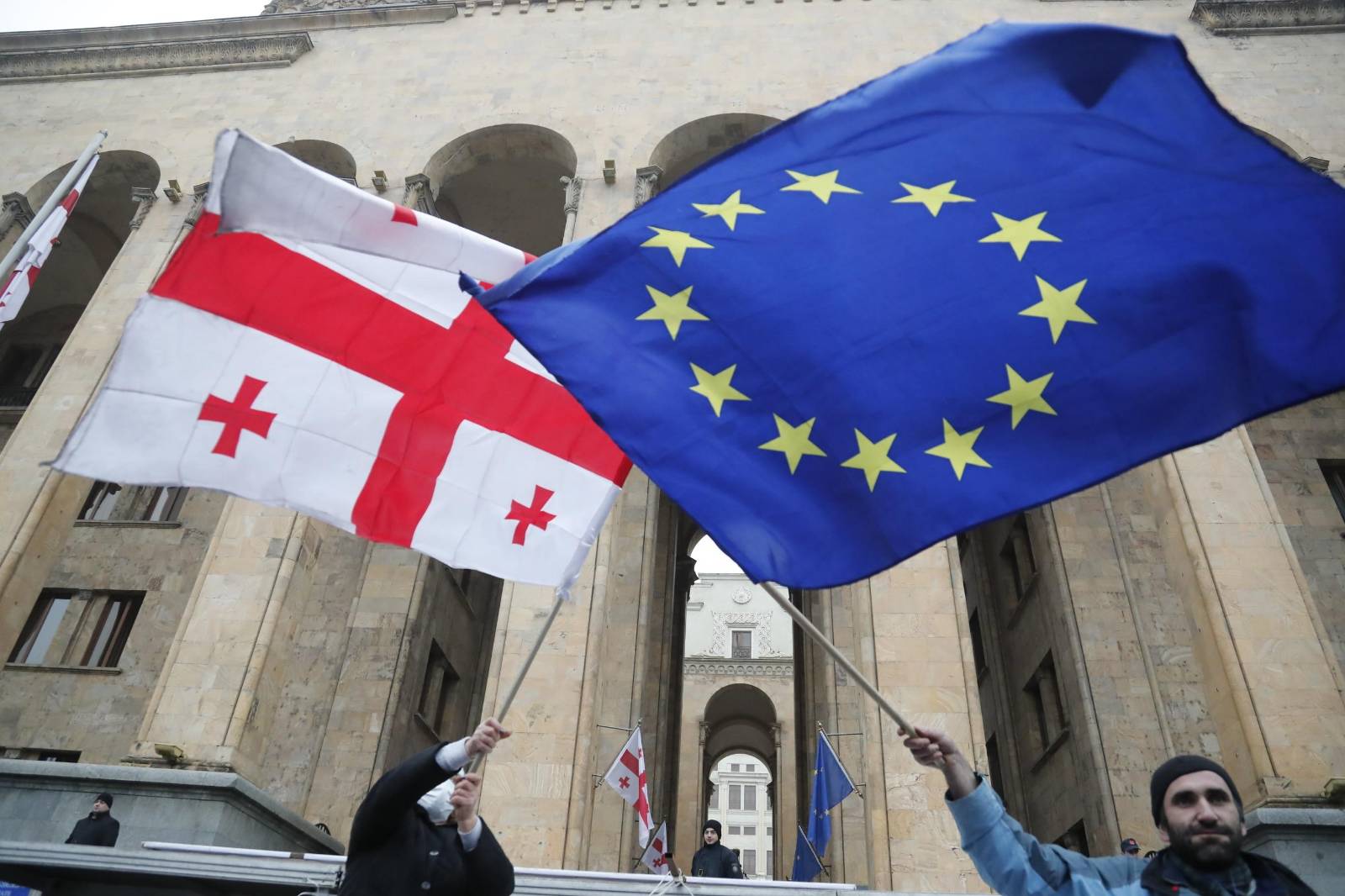
European countries have proposed introducing sanctions against Georgia
The Netherlands, the Czech Republic, Sweden and Estonia proposed that the European Union impose sanctions against Georgia due to the adoption of the law on foreign agents. Among the proposed measures are the abolition of the visa-free regime in the EU for Georgian citizens, the freezing of funding for a number of programs and targeted sanctions against officials.
The day before, the Secretary General of the Council of Europe, Maria Pejcinovic-Burich, called on Tbilisi to implement the recommendations of the Venice Commission. She criticized the law on foreign agents in Georgia, which has much in common with similar initiatives in the Russian Federation, Hungary and Kyrgyzstan.
“The current version of the law creates negative obstacles to freedom of assembly and expression, the right to privacy, the right to engage in public affairs, as well as the prohibition of discrimination. This will negatively impact open, informed public debate, pluralism and democracy,” says the Venice Commission in its conclusion on the Georgian version of the law on foreign agents.
The ruling Georgian Dream party called this conclusion a “biased political assessment.”