The Kabardino-Balkarian authorities sent recommendations to Moscow to amend the law on the repatriation of Circassians

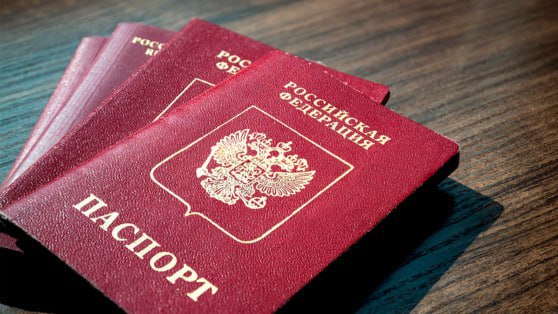
Numerous complaints and appeals from human rights defenders, activists and cultural figures from Adygea, Dagestan, Kabardino-Balkaria and Karachay-Cherkessia have yielded their first results. The Kabardino-Balkarian Ministry of Nationalities sent recommendations to the Russian government to revise the federal bill on the repatriation of Circassians and other peoples of the North Caucasus to Russia. The law was previously criticized for its discriminatory nature due to the mandatory requirement to speak Russian.

The Kabardino-Balkarian authorities recommended that the authors of the bill soften it by setting out the conditions as follows: “A foreign citizen or stateless person recognized as a compatriot, who speaks Russian or the language of a constituent entity of the Russian Federation and freely uses it in family, everyday and cultural spheres, has the right to apply for repatriation to the Russian Federation.”

Earlier, Circassian diaspora activists called on the Russian authorities to abandon the requirement for mandatory knowledge of the Russian language, as stipulated by the bill on repatriation. They emphasized that this contradicts the Constitution of the Russian Federation and threatens the federal structure of the country.

“In the countries where compatriots live, there are no conditions for systematic study of the Russian language, and therefore it is advisable to organize training after returning to their homeland, as has already happened in the case of Circassians from Kosovo and Syria. It would be fair for compatriots who speak any of the state languages ​​of the subject of the Russian Federation to be granted the right to repatriation. Otherwise, we are talking about discrimination on the basis of nationality, violating the rights of peoples to self-determination,” the appeal said.
Последние новости
Human Rights Advocates Question Investigators' Claims Linking Batalkhadzhins to the Caucasus Emirate
News
Human Rights Advocates Question Investigators' Claims Linking Batalkhadzhins to the Caucasus Emirate
1 August 2026

Russian law enforcement agencies have claimed that members of the Batalkhadzhin Sufi community were linked to the Caucasus Emirate*, a militant Islamist organisation. Human rights advocates, however, have questioned the allegations, noting that the group effectively ceased to exist more than a decade ago and that publicly available case materials contain little evidence of specific acts of support for militants.

Threat of Muslim Alkhazov's Deportation From Germany Raises Fresh Concerns Over the Status of Chechen Asylum Seekers in Europe
Human rights
Threat of Muslim Alkhazov's Deportation From Germany Raises Fresh Concerns Over the Status of Chechen Asylum Seekers in Europe
1 August 2026

Germany's decision to deport Chechen-born Muslim Alkhazov despite claims by his legal team that his family has been persecuted has sparked renewed concern among Chechen human rights advocates and members of the diaspora across Europe. They argue that the case could signal an emerging shift in how European authorities assess asylum claims filed by people from Chechnya.

Drone attack on Volgograd leaves one dead, eight injured
News
Drone attack on Volgograd leaves one dead, eight injured
31 July 2026

The number of people injured in a large-scale Ukrainian drone attack on the southern Russian city of Volgograd has risen to nine after rescuers recovered the body of a woman from the rubble of a residential building struck overnight on July 31.

Second Initiative to
Society
Second Initiative to "Protect National Values" Launched in Georgia in a Week
31 July 2026

Another public initiative aimed at protecting "national values" has emerged in Georgia. This time, the launch of a platform was announced by actor Giorgi Shanidze, director Giorgi Sikharulidze, and Kote Mzhavia, the director of the Batumi Drama Theater. They propose drafting a law intended—in their view—to protect the church, sacred sites, historical figures, and other "fundamental values" of the country.