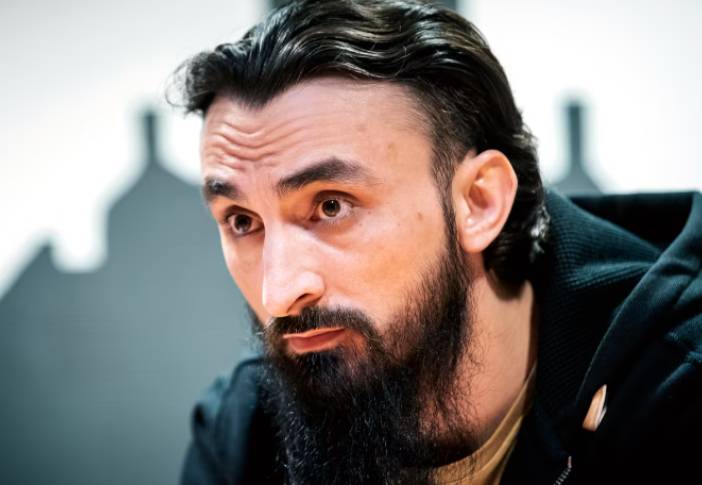
On April 16, Chechen blogger Tumso Abdurakhmanov, one of the most famous critics of Ramzan Kadyrov, living in Europe, stated on his YouTube channel that he faked his own death after he became aware of the impending assassination attempt. The video post was published under the title “Operation Sucker.” How I scammed Kadyrov." However, according to other bloggers and journalists, Tumso rather scammed his subscribers. The scandalous story of the staging led to a worsening split among the Chechen opposition.
Reports of Tumso's murder appeared on the Internet on December 1, but there was no official confirmation from the Swedish police or his relatives. On December 5, the 1ADAT telegram channel (recognized as extremist in Russia) announced that, according to their data, Tumso Abdurakhmanov had been killed, and his brother Muhammad was being hidden by the police for security reasons.
There had been attempts on the life of the Chechen blogger and his brother before; they blamed the pro-Russian leadership of Chechnya for the attacks, so no one doubted that this was a political order from Kadyrov. However, on December 8, the director of ChGTRK “Grozny” Chingiz Akhmadov accused the head of the government of Ichkeria in exile, Akhmed Zakayev, of the murder of Tumso. The next day, information appeared that the blogger was alive and testifying in Munich in court in the case of an attempt on the life of his younger brother Mukhammd Abdurakhmanov.
Returning to the public sphere three months later, Tumso did not explain his disappearance. Ibragim Yangulbaev did it for him on the 1ADAT channel. According to him, Abdurakhmanov and another Chechen oppositionist Khalid Khalitov, living in Turkey, participated in deceiving Kadyrov. He allegedly ordered their murder, and the perpetrators with an intermediary - a certain Bashir Albogachiev from Ingushetia - decided that it was better to share part of the “fee” with the victims and stage the murder than to actually commit these crimes.
Ibragim Yangulbaev published voice messages that Albogachiev exchanged with Khalitov and Abdurakhmanov. It follows from them that Khalitov requested and received $600 thousand from Albogachiev for a video from a Turkish prison where he was allegedly poisoned. Abdurakhmanov received $1.1 million for the video of the shooting near the garbage cans where he was allegedly killed, and the subsequent silence “on air.”
Ibragim Yangulbaev admitted that he himself received 50 thousand dollars from the intermediary Kadyrov for confirming false information about the murder of Tumso Abdurakhmanov, although he knew about the deception. However, he did not admit any reproaches against himself in this regard, saying that he received “only 50 thousand dollars - a symbolic amount.”
April 25 “Novaya Gazeta. Europe" published Elena Milashina's material "To die for fun, but to be silent for real. How to eliminate critics without the participation of a killer. Recipe from Ramzan Kadyrov." According to the author, “a successful provocation took place, the victims of which were the most influential critics of Ramzan Kadyrov.” Indeed, as a result of this provocation, opposition bloggers, instead of telling readers about the events in Chechnya, sorted things out, accusing each other of corruption, their subscribers felt deceived, the Voice of Chechnya party, the creation of which was announced by Tumso on the eve of the “attack,” and did not begin to act, Akhmed Zakayev had to explain himself about the accusations of contract murder, and “the head of Chechnya could only sit in the front row and applaud how convincingly his critics turned into clowns in front of the amazed public.”
In addition, Elena Milashina accused Ibragim and Baysangur Yangulbayev of involvement in the activities of the telegram channel of blackmailers who extort money from people with non-traditional sexual orientation.
Tumso Abdurakhmanov called Milashina’s article unsubstantiated. He again expressed confidence that he had really “cheated” Ramzan Kadyrov.